Back to home
INTERNATIONAL28 March 2026
The Killing of Lebanese Journalists: Media Warfare in the Middle East
The killing of three Lebanese journalists, including a Hezbollah-affiliated media figure, represents a dangerous escalation in the weaponization of media in Middle Eastern conflicts, raising fundamental questions about the boundaries between combatants and journalists.
La
La Rédaction
The Vertex
5 min read
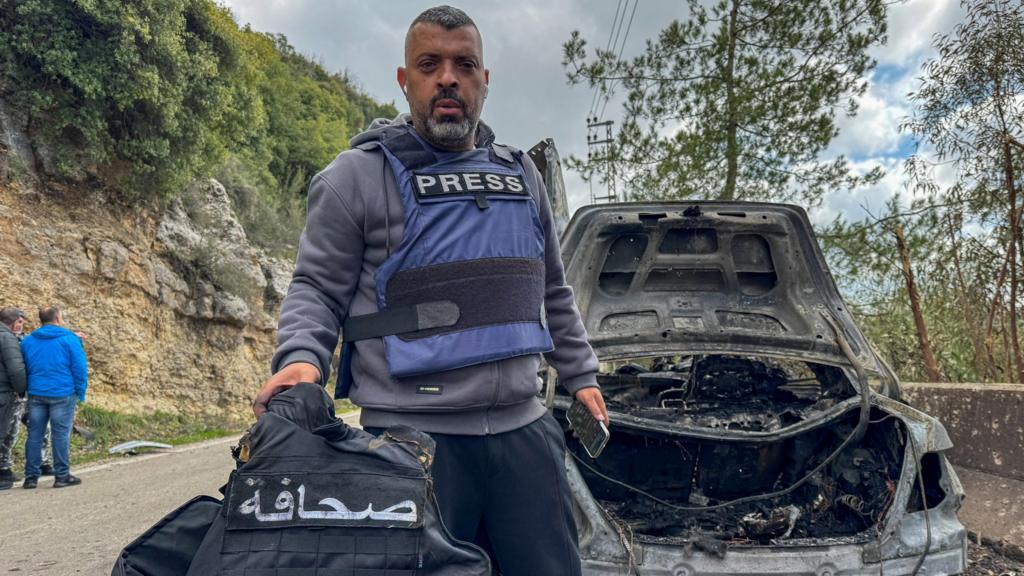
Source: www.bbc.com
The deaths of three Lebanese journalists in an Israeli strike, including Ali Shoeib from Hezbollah-affiliated Al Manar TV, represent more than a tragic loss of life—they signify a dangerous escalation in the weaponization of media in Middle Eastern conflicts. This incident raises fundamental questions about the boundaries between combatants and journalists in modern asymmetric warfare.
For decades, Lebanon's media landscape has been deeply intertwined with its sectarian and political divisions. Al Manar, launched in 1991, has long served as Hezbollah's primary communication arm, broadcasting propaganda while claiming journalistic independence. The killing of Shoeib and his colleagues blurs the already tenuous line between legitimate military targets and protected journalists under international law.
The Israeli military's confirmation of the strike suggests a deliberate targeting strategy that views certain media figures as extensions of militant organizations rather than neutral observers. This approach mirrors tactics employed by various actors in the region who increasingly treat information warfare as a legitimate battlefield. The deaths of these journalists may well be calculated to disrupt Hezbollah's narrative operations rather than simply eliminate individual operatives.
What makes this incident particularly concerning is its potential precedent. If journalists affiliated with political movements can be targeted as combatants, it creates a dangerous framework where media becomes fair game in conflicts worldwide. The international community's response—or lack thereof—will likely determine whether this represents an isolated incident or the beginning of a new normal in modern warfare.
The killing of journalists in conflict zones has historically been condemned as an attack on press freedom. However, when media outlets function as propaganda arms for militant groups, the ethical and legal calculus becomes infinitely more complex. This incident may force a reckoning with how we define journalistic protection in an era where information itself has become a weapon of war.