Back to home
INTERNATIONAL4 July 2026
Tehran Swells with Mourning as Khamenei’s Body Lies in State
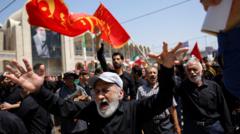
Thousands gathered in Tehran on the opening day of Ayatollah Ali Khamenei’s funeral, where his body will lie in state at the Grand Mosalla before a cross‑border procession. The event offers a vivid glimpse into the regime’s efforts to project unity amid mounting domestic pressures.
La
La Rédaction
The Vertex
5 min read
Source: www.bbc.co.uk
On the opening day of Ayatollah Ali Khamenei’s funeral, Tehran’s streets filled with thousands of mourners, many dressed in black and clutching portraits of the late supreme leader. The sheer scale of the gathering, unprecedented since the 1979 revolution, underscores the profound impact of Khamenei’s three‑decade tenure on the nation’s collective identity.
The body will remain in state at the Grand Mosalla until Monday, after which a multi‑day procession will traverse Iran and Iraq, symbolising both a domestic farewell and a regional display of solidarity. The route will pass through holy cities such as Qom and Najaf, and the final destination in Iraq will be the shrine of Imam Ali in Najaf, underscoring the deceased leader’s connection to the broader Shia pilgrimage tradition. Security forces have deployed extensive surveillance and roadblocks, reflecting the regime’s determination to prevent any dissent from eclipsing the ceremony.
Khamenei’s death arrives at a moment of heightened internal tension, as economic hardship and public protests over civil liberties have eroded the regime’s legitimacy. The funeral’s choreography—state‑orchestrated mourning followed by a cross‑border pilgrimage—aims to re‑assert ideological continuity while placating a populace increasingly skeptical of clerical authority. Khamenei succeeded Ayatollah Khomeini in 1989, steering Iran through the Iran‑Iraq war, the nuclear standoff, and a sustained policy of regional projection that has kept the country at the centre of geopolitical rivalries.
Looking ahead, the funeral will serve as a litmus test for the power structures contending for succession. If the ceremony consolidates the authority of the current establishment, it may stabilize the political climate; conversely, any perceived misstep could fuel further unrest and accelerate the already fragile transition toward a post‑Khamenei Iran. The Assembly of Experts, tasked with selecting the next supreme leader, is expected to convene shortly, and the ensuing debates will reveal whether the regime favours a hardline continuity or a more conciliatory approach that might ease domestic pressures and reshape Iran’s foreign posture.