Back to home
POLITICS29 April 2026
The Monarch’s Congressional Gambit: Five Insights from a Historic Address
The King’s rare address to a joint session of Congress blended ceremonial tradition with a call for bipartisan cooperation, offering Democrats a symbolic boost while unsettling the White House. Its nuanced framing of domestic policy as part of a enduring transatlantic partnership hints at future legislative possibilities.
La
La Rédaction
The Vertex
5 min read
Source: www.bbc.com
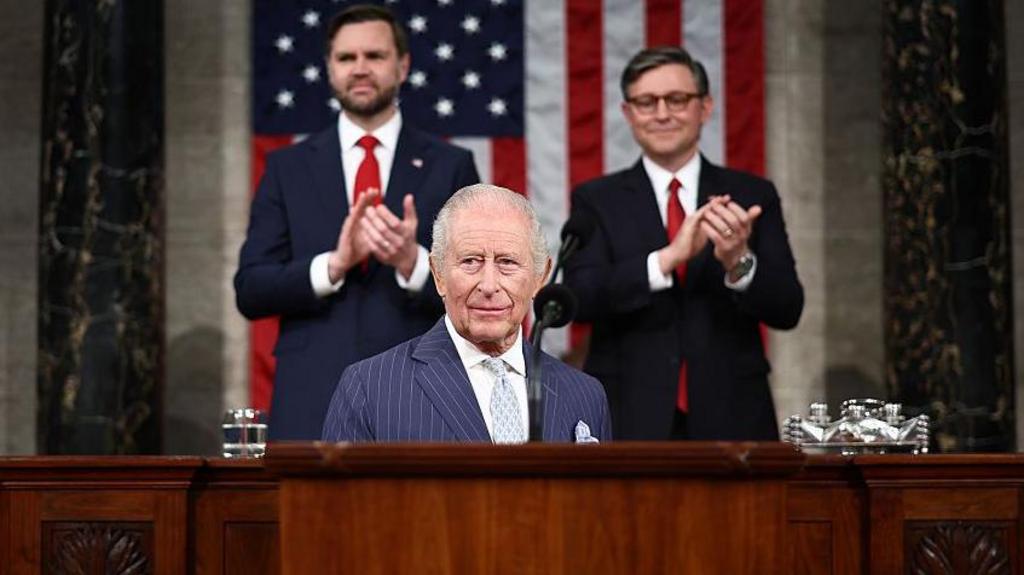
Le address was delivered in a solemn hall, the King standing before a joint session of Congress, a rare spectacle that fused ceremonial tradition with contemporary political stakes. The speech opened with a reference to the shared destiny of the two nations, invoking the post‑World War II alliance that has underpinned transatlantic stability for eight decades. By juxtaposing historic sacrifice with present challenges, the monarch sought to frame the current debate over domestic spending and climate legislation as part of a larger, enduring partnership.
The most resonant passages were those that praised the resilience of American democracy while subtly urging bipartisan cooperation on fiscal restraint and green investment. Democrats found a rhetorical ally in the Crown’s call for unity, which contrasted with the administration’s recent policy reversals. Conversely, the White House expressed caution, wary that the royal endorsement might undermine the separation of powers or be interpreted as external pressure on legislative outcomes.
Contextually, the address reflects a broader trend in which constitutional monarchies leverage ceremonial moments to influence public opinion without direct political involvement. Historical precedents, from Queen Elizabeth II’s 1975 United Nations speech to King Philippe’s 2022 address to the French Parliament, illustrate how royal rhetoric can amplify or temper domestic narratives. In the United States, where the presidency dominates the foreign‑policy arena, the King’s intervention underscores the symbolic weight of the Crown in a nation that prides itself on republican ideals.
Looking ahead, the speech may serve as a catalyst for renewed dialogue on infrastructure funding and climate accords, especially if congressional leaders translate the monarch’s moral appeal into concrete legislative initiatives. Its lasting impact will depend on whether the address translates symbolic goodwill into measurable policy outcomes, thereby testing the limits of soft power in a polarized political climate.