Back to home
INTERNATIONAL17 June 2026
Jerusalem’s Holy Status Quo Under Siege
Israeli nationalist groups are challenging the longstanding status‑quo at Jerusalem’s al‑Aqsa compound, raising fears of renewed violence and diplomatic strain. The situation tests the durability of the historic arrangement and its broader implications for the Israeli‑Palestinian conflict.
La
La Rédaction
The Vertex
5 min read
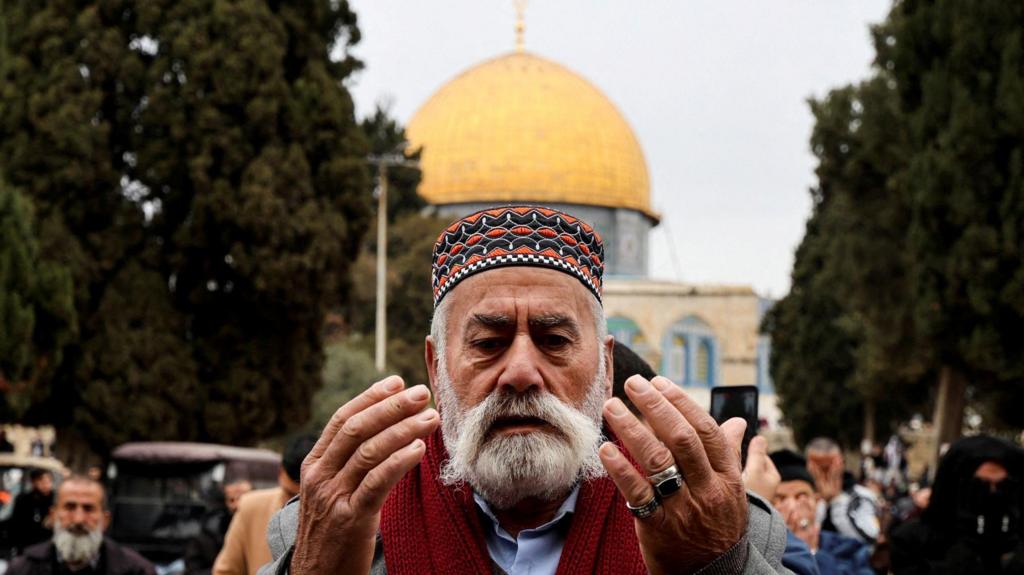
Source: www.bbc.com
At the heart of the Middle East, the al‑Aqsa compound – known to Muslims as Haram al‑Sharif and to Jews as the Temple Mount – has long been governed by an informal status‑quo that balances Jewish and Muslim worship.
Recent incursions by Israeli nationalist groups, however, have begun to erode this delicate arrangement, raising the specter of wider conflict.
These groups, often organized under the umbrella of the Temple Mount Faithful, have repeatedly ignored the longstanding understanding that Muslims retain exclusive prayer rights in the mosque while Jews may pray at the Western Wall. By staging prayer gatherings, installing temporary structures, and asserting sovereignty over the site, they challenge the legal and religious frameworks that have prevented overt clashes for decades. The Israeli police’s tepid response suggests a tacit tolerance that emboldens the activists, while Palestinian officials warn that the erosion of the status‑quo fuels resentment and may ignite a new wave of unrest.
The status‑quo emerged from the 1840 Ottoman decree and was reinforced after the 1967 war, when Israel captured East Jerusalem but agreed to leave the compound under Muslim custodianship. Decades of coexistence have been fragile, punctuated by periodic disputes over access, construction, and security. The current escalation fits into a broader pattern of demographic and political shifts: growing Israeli settlement activity, heightened rhetoric about “reclaiming” the Temple Mount, and a Palestinian populace increasingly frustrated by limited self‑determination.
If the status‑quo continues to fray, the implications could be profound. A breach may trigger violent confrontations, strain Israel’s international standing, and complicate peace negotiations already stalled. Conversely, a coordinated reaffirmation of the arrangement could restore confidence, though it would require sustained political will from both sides and the backing of external stakeholders such as the United Nations and regional actors.