Back to home
INTERNATIONAL7 April 2026
JD Vance's Budapest Visit: A Strategic Endorsement of Orban's Authoritarian Turn
JD Vance's visit to Hungary signals a strategic shift in US foreign policy, as Washington endorses Viktor Orban's authoritarian leadership ahead of elections, raising concerns about transatlantic relations and democratic values.
La
La Rédaction
The Vertex
5 min read
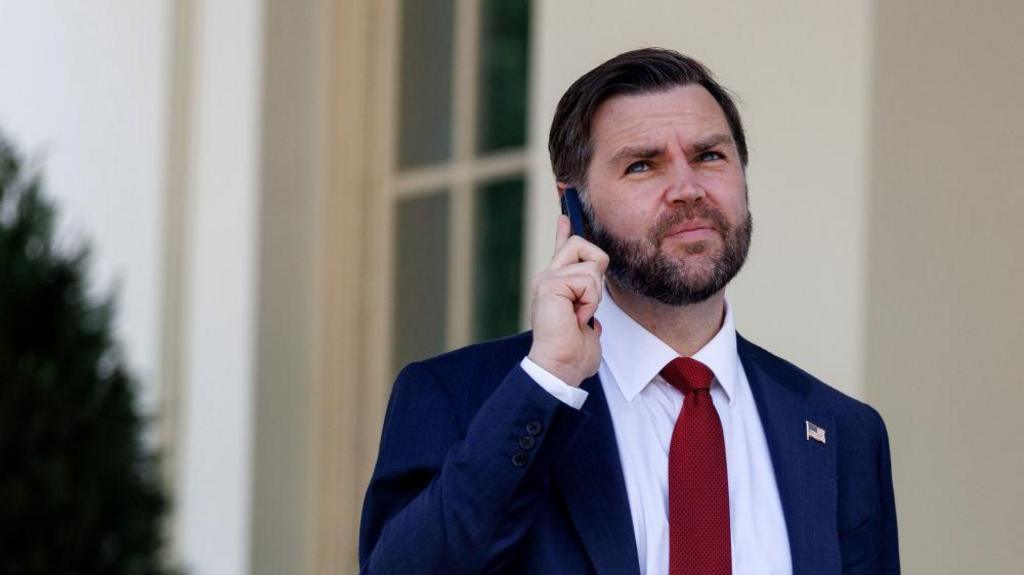
Source: www.bbc.com
The arrival of US Vice President JD Vance in Budapest marks a significant shift in American foreign policy, as Washington extends its support to Hungarian Prime Minister Viktor Orban, whose increasingly authoritarian governance has long been a source of contention within the European Union. This visit, the latest in a series of diplomatic gestures from the White House, underscores a broader realignment of US priorities in Central Europe, where strategic interests are increasingly outweighing democratic values.
Orban, who has held power since 2010, has systematically dismantled checks and balances, curtailed press freedom, and implemented policies that critics argue undermine the rule of law. His government’s cozy relationship with Russia and China has further strained Hungary’s ties with the EU, yet Vance’s presence signals a willingness by the Trump administration to overlook these concerns in favor of cultivating a reliable ally in the region.
The timing of this visit is particularly telling. With Hungary’s parliamentary elections looming, Orban’s Fidesz party is seeking to consolidate its grip on power. Vance’s endorsement, whether explicit or implicit, could provide a crucial boost to Orban’s campaign, lending international legitimacy to a leader whose domestic popularity has waned amid economic challenges and public discontent.
This development raises questions about the future of transatlantic relations. By aligning with Orban, the US risks alienating its traditional European partners, who view Hungary as a disruptive force within the EU. Moreover, it sends a troubling message about the administration’s commitment to promoting democracy and human rights abroad. As Vance’s visit unfolds, the world will be watching to see whether this marks the beginning of a new era in US-Hungarian relations—one defined by pragmatism over principle.