Back to home
SOCIETY19 June 2026
The Double Standard of Public Cleanliness and Domestic Labor
Japanese women challenged the notion that public cleaning is a male privilege, highlighting how domestic labor remains disproportionately assigned to women. The episode underscores broader gender inequities persisting in Japan despite recent social reforms.
La
La Rédaction
The Vertex
5 min read
Source: www.bbc.com
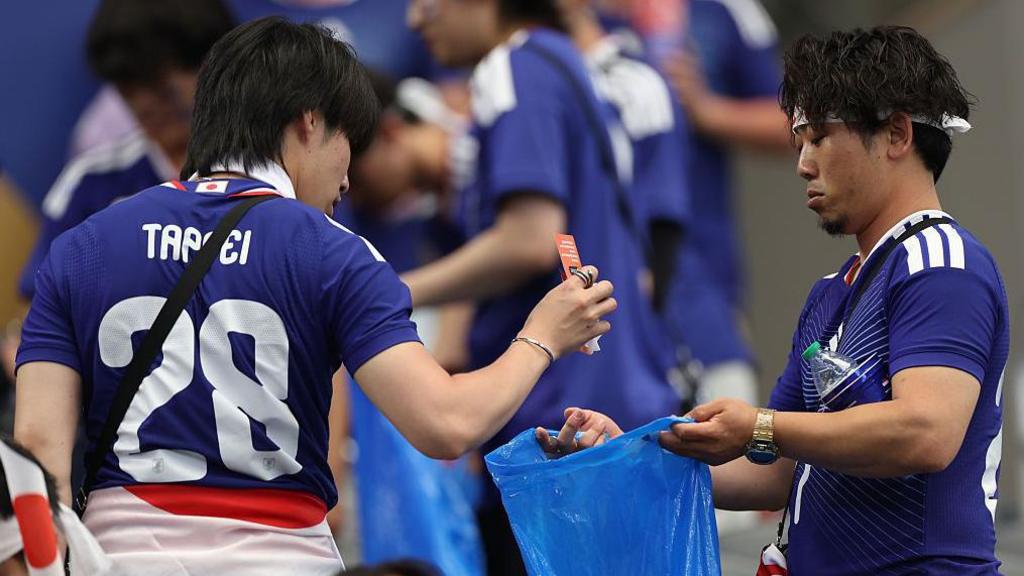
When Japanese women gathered after the 2022 World Cup to protest the sight of male fans casually sweeping the stadium’s concourse, their message was stark: the same labor should not be relegated to public spaces while women shoulder the domestic burden at home. They argued that the spectacle reinforced a longstanding double standard, where men’s public displays of cleanliness coexist with women’s invisible labor in the household.
The episode exposes a deeper cultural script in which public cleanliness is framed as a masculine virtue, while the relentless management of households—cooking, cleaning, childcare—remains a feminized duty. In Japan, where the gender gap in unpaid work remains among the highest in the OECD, such visual contradictions sustain economic inefficiencies and limit women’s professional advancement, perpetuating a cycle of unequal opportunity.
Contextualizing this moment within Japan’s recent social reforms reveals a paradox. While the government has introduced policies to encourage paternal leave and increase female labor participation, cultural expectations lag behind legislative intent. The World Cup, a global showcase of national pride, amplified the visibility of these norms, prompting a rare public reckoning that mirrors broader debates in Europe and North America about gendered division of labor.
Looking ahead, the pressure may catalyze incremental change, such as municipal programs that reward shared household responsibilities or media narratives that redefine masculinity around caregiving. Yet lasting transformation will require a shift from symbolic gestures to structural support—affordable childcare, flexible workplaces, and a cultural re‑education that normalizes men’s participation in domestic cleaning, turning the stadium’s broom into a symbol of egalitarian partnership rather than gendered spectacle.