Back to home
INTERNATIONAL20 April 2026
Religious Desecration in the Levant: When Military Actions Become Symbolic Warfare
The vandalism of a Jesus statue in Lebanon by an Israeli soldier has sparked outrage, highlighting the complex interplay between military actions and religious sensitivities in the Middle East. This incident underscores the challenges of maintaining cultural awareness in conflict zones and its potential to inflame sectarian tensions.
La
La Rédaction
The Vertex
5 min read
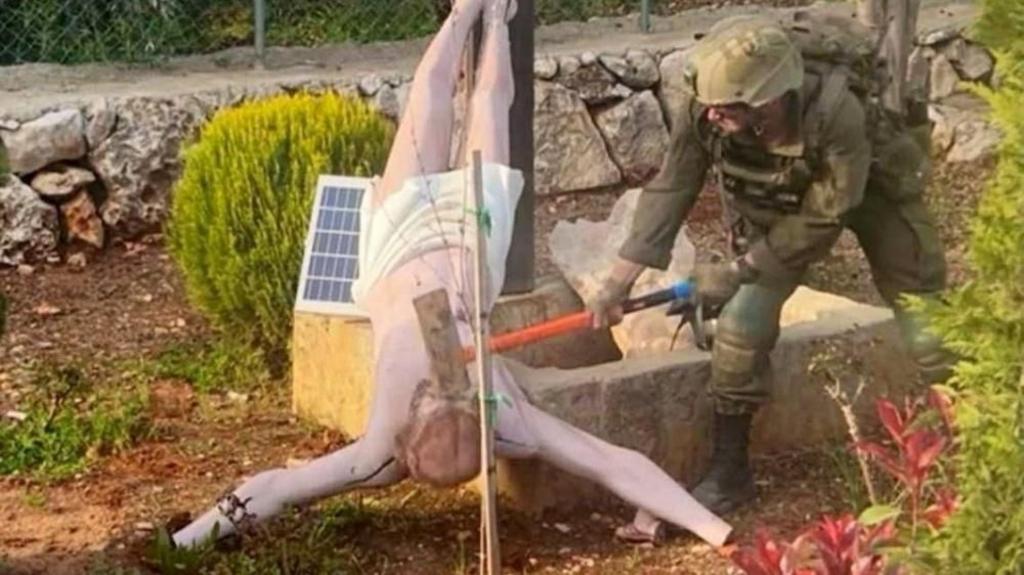
Source: www.bbc.com
The recent act of vandalism against a Jesus statue in Lebanon by an Israeli soldier has ignited a firestorm of controversy that transcends the immediate incident. This event, occurring in a region already fraught with religious and political tensions, serves as a stark reminder of how military actions can carry profound symbolic weight beyond their tactical significance.
The Levant, a crossroads of civilizations and faiths, has long been a battleground not just for territorial control but for cultural and religious dominance. The desecration of a Christian religious symbol by a member of the Israeli Defense Forces (IDF) is particularly incendiary given the complex tapestry of religious communities in Lebanon, including a significant Christian minority. This act, whether intentional or not, risks inflaming sectarian tensions and providing ammunition to those who seek to portray the Israeli-Palestinian conflict as a religious war rather than a political one.
From a strategic perspective, this incident highlights the challenges of maintaining discipline and cultural sensitivity in military operations, especially in areas with deep religious significance. The Israeli military's swift condemnation and promise of consequences suggest an awareness of the potential diplomatic fallout. However, the damage to Israel's image, particularly in Christian-majority countries and among religious conservatives worldwide, may already be done.
Looking forward, this event could have far-reaching implications for regional dynamics. It may complicate efforts at interfaith dialogue and peace-building initiatives. Moreover, it provides a potent propaganda tool for groups seeking to undermine Israel's legitimacy or to rally support for anti-Israel causes. As the international community watches closely, the handling of this incident by Israeli authorities will be crucial in determining whether it remains an isolated event or becomes a flashpoint in an already volatile region.