Back to home
POLITICS30 March 2026
Israel's Controversial Death Penalty Expansion: A New Chapter in the Israeli-Palestinian Conflict
Israel's parliament has passed a controversial law allowing the death penalty for Palestinians convicted of deadly attacks, marking a significant escalation in the Israeli-Palestinian conflict and raising concerns about human rights and regional stability.
La
La Rédaction
The Vertex
5 min read
Source: www.bbc.com
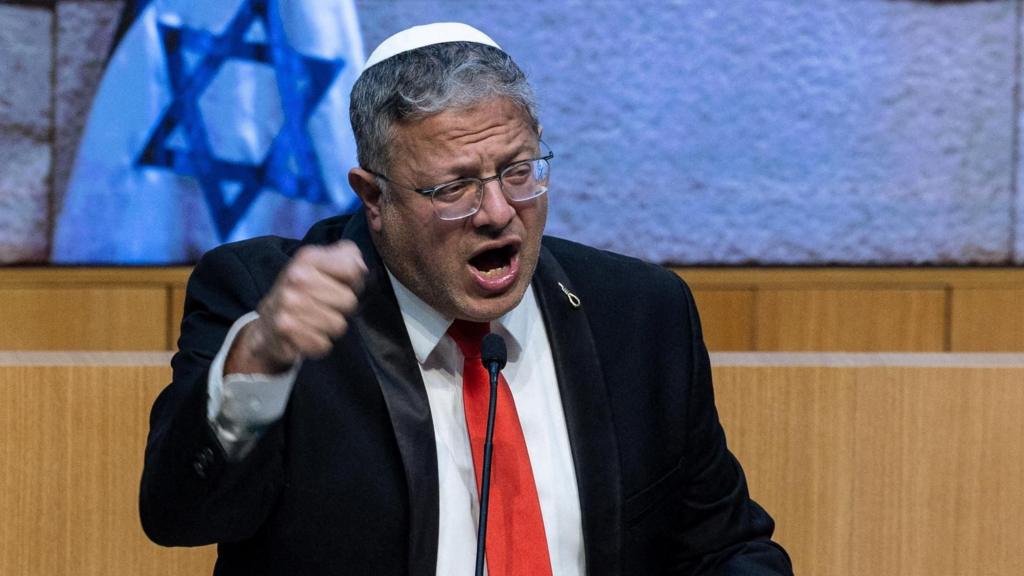
In a move that has sent shockwaves through the international community, Israel's parliament has passed a new law allowing the death penalty for Palestinians convicted of deadly attacks. This legislation, championed by far-right Security Minister Itamar Ben-Gvir, marks a significant escalation in the already volatile Israeli-Palestinian conflict.
The law's passage represents a dramatic shift in Israel's long-standing policy, which had effectively maintained a moratorium on capital punishment since the execution of Nazi war criminal Adolf Eichmann in 1962. Proponents argue that the measure is a necessary tool to deter terrorism and provide justice for victims of deadly attacks. However, critics view it as a dangerous step that could further inflame tensions and undermine prospects for peace.
This development must be understood within the broader context of Israel's increasingly right-wing political landscape. The current government, led by Prime Minister Benjamin Netanyahu, includes several far-right parties that have pushed for more hardline policies towards Palestinians. The death penalty law is seen by many as a manifestation of this ideological shift and a response to pressure from the government's more extreme elements.
The international reaction has been swift and largely negative. Human rights organizations have condemned the law as a violation of international norms and a potential tool for oppression. The European Union has expressed concern, while the United States has urged restraint and called for the preservation of the peace process.
Looking ahead, this legislation could have far-reaching consequences for the region. It may lead to increased radicalization on both sides, complicate diplomatic efforts, and potentially result in a humanitarian crisis if mass trials and executions were to occur. The coming months will be crucial in determining whether this law becomes a flashpoint for further conflict or a catalyst for renewed negotiations.