Back to home
INTERNATIONAL28 June 2026
Israel Strikes Southern Lebanon as Hezbollah Condemns New Deal
Israeli warplanes hit southern Lebanon a day after a framework agreement was signed, killing at least one civilian. Hezbollah denounced the strike as a breach of sovereignty, signalling a potential escalation in the already fragile post‑ceasefire environment.
La
La Rédaction
The Vertex
5 min read
Source: www.bbc.co.uk
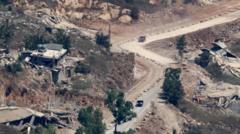
On the morning of June 27, 2026, Israeli warplanes struck targets in southern Lebanon, killing at least one civilian, according to state media. The attack came a day after Lebanese authorities and Israel formalised a framework agreement intended to delineate borders and ease tensions along the Blue Line. The strike underscores the fragility of the arrangement and the readiness of both sides to resort to force when perceived red lines are crossed.
The condemnation issued by Hezbollah reflects the group’s broader strategy of framing any Israeli military action as a violation of Lebanon’s sovereignty. By denouncing the strike as an act of aggression, Hezbollah seeks to rally domestic support and reinforce its narrative that the state cannot protect the nation without its armed wing. This rhetoric also signals to Israel that any escalation will be met with a coordinated response, raising the stakes for diplomatic calculations.
The framework agreement, negotiated behind closed doors, marks the first formal attempt since the 2020 ceasefire to codify the demarcation of the border and regulate the presence of armed groups. While the text promises reduced hostilities, its implementation hinges on the willingness of both parties to respect the agreed lines and to restrain proxy activities. Historical patterns suggest that violations are often used as pretexts for broader operations, making the current accord vulnerable to misinterpretation.
Looking ahead, the incident may either catalyse a renewed push for a durable political settlement or trigger a cycle of retaliation that could destabilise the already volatile security environment in the eastern Mediterranean. International mediators will likely intensify their efforts, but the entrenched mistrust and the strategic depth of Hezbollah’s arsenal present formidable obstacles to lasting de‑escalation.