Back to home
INTERNATIONAL27 June 2026
A Fragile Accord: Israel and Lebanon’s US‑Brokered Framework
Israel and Lebanon have signed a US‑mediated framework aimed at ending near‑daily border clashes, yet Hezbollah is excluded and previous truces have repeatedly collapsed. The deal’s durability will depend on enforcement, US pressure and Hezbollah’s strategic calculations.
La
La Rédaction
The Vertex
5 min read
Source: www.bbc.co.uk
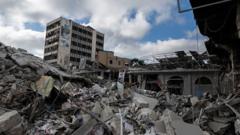
On Friday, Israel and Lebanon signed a US‑brokered framework agreement to halt the near‑daily cross‑border violence that has plagued the frontier since 2021, marking a rare diplomatic breakthrough after months of escalating tension.
The pact balances Israeli demands for a secure buffer with Lebanese claims to border sovereignty. By handing implementation to a joint US‑Lebanese monitoring committee, it aims to bypass Hezbollah’s parallel forces, though it contains no binding limits on the militia’s activities, raising doubts about the truce’s durability. Israeli officials warn that any residual Hezbollah activity could trigger retaliatory strikes, complicating the monitoring process. The agreement comes amid broader regional instability, with Iran’s influence in Lebanon and Israel’s security concerns shaping the negotiations.
The cessation of hostilities should ease humanitarian pressure on border communities that have suffered displacement, damaged infrastructure, and trade disruption. Yet sporadic strikes continue to deter investment and hinder reconstruction, meaning lasting peace will require parallel governance and fiscal reforms in Lebanon. Local businesses hope that reduced violence will revive tourism and agricultural exports, sectors that have been crippled by the intermittent clashes.
Contextually, the deal echoes the 2006 UN‑mandated ceasefire that expanded UNIFIL’s mandate and the 2020 US‑led effort that tried to separate the parties via a sea‑based buffer. Both previous attempts faltered over Lebanon’s inability to enforce security in areas dominated by non‑state actors.
Looking ahead, the framework’s success depends on both governments enforcing the agreed limits, sustained US pressure, and Hezbollah’s strategic calculations. If these align, the accord could stabilize the northern border; if not, the region may slip back into intermittent violence.