Back to home
INTERNATIONAL27 June 2026
A Fragile Framework: The US‑Brokered Israel‑Lebanon Ceasefire Deal
Israel and Lebanon have signed a US‑mediated framework agreement, though Hezbollah was excluded and past truces have not prevented near‑daily cross‑border fire.
La
La Rédaction
The Vertex
5 min read
Source: www.bbc.co.uk
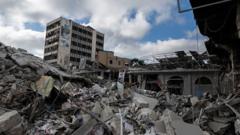
On Friday, Israel and Lebanon formally adopted a framework agreement brokered by the United States, marking a tentative step toward de‑escalation after years of intermittent conflict. The deal, however, excludes Hezbollah, the dominant Shiite militia that has repeatedly flouted previous ceasefire terms, and it arrives amid a pattern in which even the most recent truces have been punctuated by near‑daily cross‑border strikes.
The agreement's limited scope reflects the divergent priorities of the two states: Israel seeks to curb Hezbollah's rocket capabilities and secure a buffer zone, while Lebanon aims to assert sovereignty over its border without confronting the heavily armed militia. U.S. diplomats have emphasized verification mechanisms, yet the absence of a joint monitoring body raises doubts about durability, especially given the political volatility within Lebanon's fragmented parliament.
Historically, Israel‑Lebanon ceasefires have followed a cyclical rhythm: a period of reduced hostilities is followed by a resurgence of fire, often triggered by regional spillovers such as the Syrian war or Iranian proxy activity. The 2020 and 2022 agreements, similarly mediated by Washington, achieved temporary lulls but failed to address the underlying power imbalance, leaving the border as a flashpoint for broader geopolitical contests.
The longevity of this framework will depend on both parties' willingness to honor its modest concessions and on the United States' sustained diplomatic pressure. Without a robust enforcement mechanism, the agreement may serve only as a temporary reprieve, postponing rather than resolving the deeper contest over security, sovereignty, and regional influence that continues to shape the Levant. Moreover, the regional actors, including Syria and Iran, may exploit any perceived weakness to advance their own strategic calculations, further testing the agreement's resilience.