Back to home
INTERNATIONAL2 March 2026
The Tinderbox of the Levant: Escalation Between Israel and Hezbollah Threatens Regional Stability
Recent clashes between Israel and Hezbollah, triggered by rocket fire from Lebanon, highlight the fragile peace in the region and the ongoing proxy war between Israel and Iran. The situation risks further destabilizing Lebanon and escalating into a broader conflict.
La
La Rédaction
The Vertex
5 min read
Source: www.bbc.com
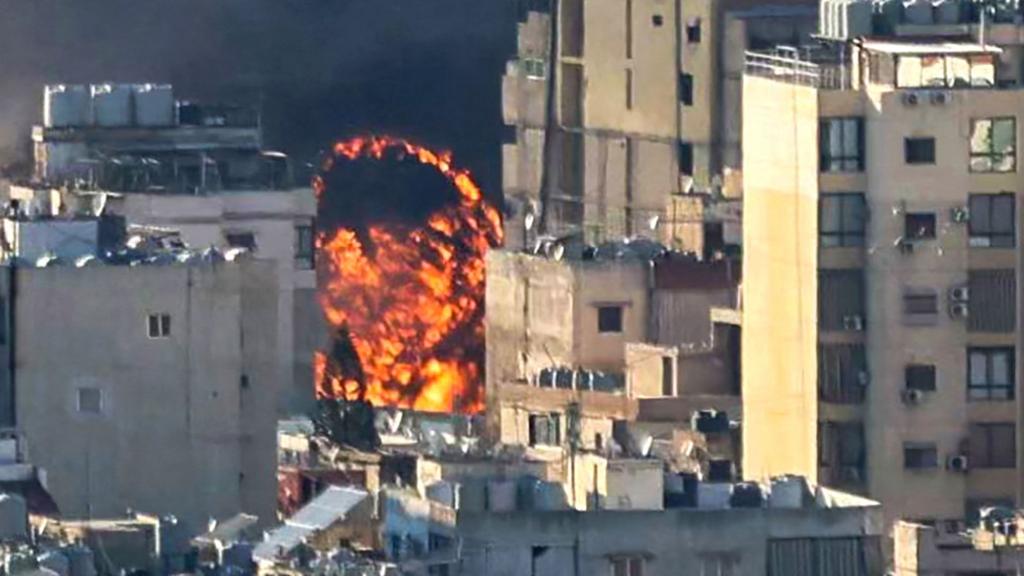
The recent exchange of fire between Israel and Hezbollah, triggered by rocket launches from Lebanon, serves as a stark reminder of the fragility of peace in the Levant. While seemingly isolated, this escalation is deeply embedded within a complex web of regional power dynamics, primarily the ongoing shadow war between Israel and Iran. Lebanon's health ministry reports a devastating loss of life from Israeli strikes, further inflaming tensions and complicating any potential path toward de-escalation.
The historical context is crucial. Hezbollah, a Shia Islamist political party and militant group, has long served as a key Iranian proxy in the region. Its presence in Lebanon provides Iran with a strategic foothold on Israel's northern border. The current clashes are not simply about border skirmishes; they represent a continuation of decades-long hostility and mistrust, fueled by differing ideologies and geopolitical ambitions.
The immediate trigger – Hezbollah's rocket fire – cannot be viewed in isolation. It must be understood within the broader context of the Gaza conflict and the perception of Israeli aggression in Palestinian territories. Hezbollah often positions itself as a defender of Palestinian rights, and any perceived escalation by Israel against Palestinians invariably leads to heightened tensions along the Israel-Lebanon border.
Israel's response, characterized by airstrikes and artillery fire, aims to deter further attacks and degrade Hezbollah's military capabilities. However, such actions risk further destabilizing Lebanon, a country already grappling with severe economic and political crises. The Lebanese state, weakened by internal divisions and external pressures, struggles to exert control over Hezbollah's actions, further complicating the situation.
The involvement of Iran adds another layer of complexity. Iran's support for Hezbollah is both financial and ideological, providing the group with the resources and justification to challenge Israel. This proxy relationship allows Iran to project power in the region without directly engaging in open warfare, a strategy that has proven effective in maintaining a constant state of tension. The escalation benefits Iranian hardliners, who seek to project strength and challenge the US and its allies in the region.
Looking ahead, the prospects for a lasting peace remain bleak. The underlying issues – the Israeli-Palestinian conflict, Iranian influence in Lebanon, and the internal divisions within Lebanon – are deeply entrenched and resistant to easy solutions. A full-scale war between Israel and Hezbollah would have catastrophic consequences for both countries and the wider region. Diplomatic efforts, led by international actors, are crucial to preventing further escalation and fostering a dialogue that addresses the root causes of the conflict. However, the success of such efforts hinges on the willingness of all parties to compromise and prioritize stability over short-term gains. The potential for miscalculation remains high, making the Levant a dangerous tinderbox ready to ignite at any moment. The international community must recognize the gravity of the situation and act decisively to prevent a wider conflagration. The path forward requires acknowledging the legitimate security concerns of all parties and fostering a genuine commitment to a lasting and equitable peace.