Back to home
INTERNATIONAL28 May 2026
A Targeted Strike that Redraws the Beirut‑Lebanon Frontier
Israel’s precise airstrike on Beirut signals a strategic shift, testing Lebanon’s fragile stability and raising fears of broader escalation. The move underscores the enduring volatility of the Israeli‑Hezbollah rivalry and its impact on regional security.
La
La Rédaction
The Vertex
5 min read
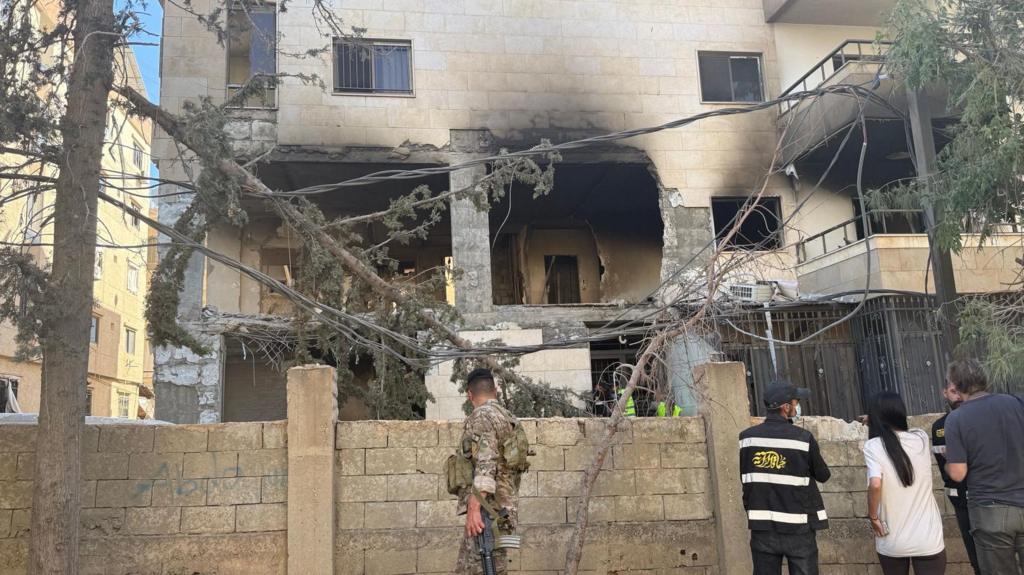
Source: www.bbc.com
Beirut, long insulated from the volatility that has defined the Israeli‑Lebanese border, suddenly found itself at the centre of a precise Israeli airstrike that targeted a site within the capital.
Politically, the operation signals a decisive shift in Israeli strategy, moving from border skirmishes to intra‑urban precision attacks, while militarily it aims to cripple Hezbollah’s command and logistics networks without igniting a full‑scale war. The strike also raises immediate economic concerns, as markets near the target experienced power outages and heightened security checks, and it threatens Lebanon’s fragile tourism sector, a key source of foreign exchange.
Contextually, the raid follows a series of ceasefire violations—artillery exchanges, drone incursions, and cross‑border infiltrations—that have gradually eroded the 2022 agreement. International mediators, including the United Nations and regional powers, have urged restraint, yet the broader contest between Iran‑backed Hezbollah and a US‑led coalition persists, leaving Lebanon’s fragile confessional system increasingly vulnerable.
Looking ahead, the strike could trigger a rapid escalation if Hezbollah retaliates with rocket fire on Israeli cities, or it may compel a diplomatic recalibration that re‑engages Lebanese officials and international actors to enforce the ceasefire. For Beirut’s residents, the immediate impact is heightened insecurity, while the long‑term implication may be a deeper entrenchment of militia influence within the capital.
The economic ramifications are already evident: markets near the strike site reported power outages and heightened security checks, while the broader tourism sector, a vital source of foreign exchange for Lebanon, faces renewed uncertainty as travelers reassess the capital’s safety.