Back to home
INTERNATIONAL17 June 2026
Israel Launches Fresh Strikes in Lebanon as Trump Calls for Greater Responsibility
Trump rebuked Netanyahu over Israeli airstrikes in Lebanon, highlighting the tension between unilateral military action and diplomatic restraint, with implications for Lebanon’s fragile political order and U.S.–Israel relations.
La
La Rédaction
The Vertex
5 min read
Source: www.bbc.com
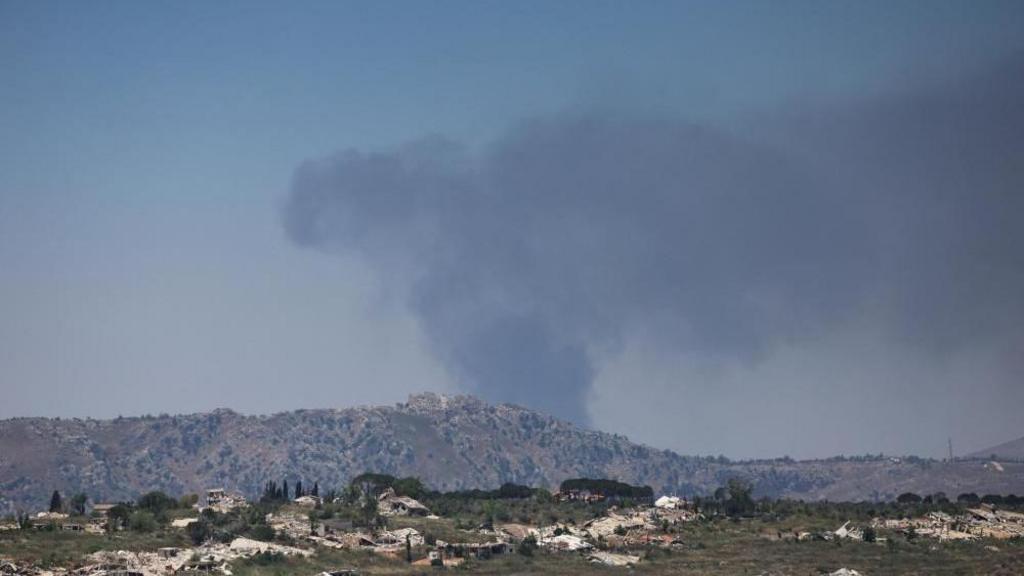
On Tuesday, Washington's former president, Donald Trump, rebuked Israeli Prime Minister Benjamin Netanyahu, urging more responsibility in Lebanon after a wave of Israeli airstrikes that hit targets across the border, including suspected Hezbollah weapons depots in the Baalbek and Marjeyoun districts.
The strikes, which reportedly targeted Hezbollah infrastructure in the Baalbek and Marjeyoun districts, risk escalating a fragile ceasefire that has held since the 2020 Gaza war, while simultaneously straining Israel’s diplomatic ties with its principal ally, the United States, and testing the limits of Washington’s traditional acquiescence to Israeli military operations. This operation also risks igniting sectarian tensions within Lebanon’s diverse communities, potentially reviving old fault lines that have hampered reconstruction efforts.
Lebanon’s already precarious political order—characterized by a power‑sharing parliament, a cash‑strapped government, and militias that operate semi‑autonomously—faces heightened pressure as external actors vie for influence; the United States, historically a guarantor of regional stability, now finds its leverage diluted by domestic political divisions, a Biden administration wary of entanglement, and a growing chorus of regional powers seeking to fill the vacuum. Additionally, the economic fallout threatens to worsen Lebanon’s humanitarian crisis, straining limited aid resources and health services.
The episode underscores a broader shift: Netanyahu’s willingness to act unilaterally may signal a recalibration of Israeli strategy, while Trump’s critique reflects internal U.S. debates over the cost of unconditional support, suggesting that future policy will be shaped more by strategic calculus than by rhetoric, and that Lebanon’s fragile equilibrium could be further destabilized unless diplomatic channels are reopened.