Back to home
INTERNATIONAL18 March 2026
The Assassination of Iran's Intelligence Chief: A Calculated Strike or Strategic Miscalculation?
Israel's assassination of Iran's intelligence minister Esmail Khatib marks a dramatic escalation in Middle Eastern tensions, potentially triggering broader regional conflict while demonstrating Israel's willingness to strike at the highest levels of Iranian leadership.
La
La Rédaction
The Vertex
5 min read
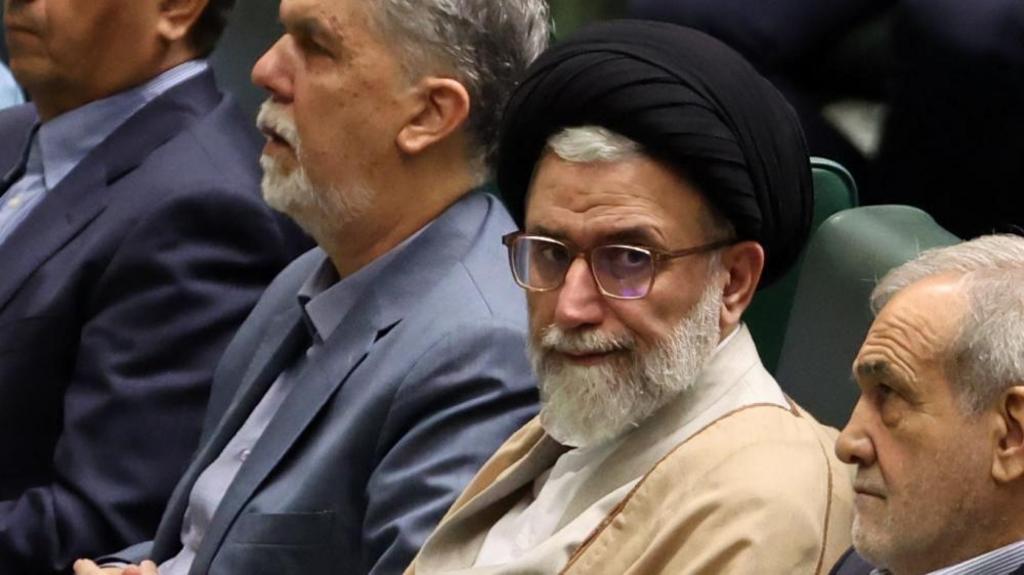
Source: www.bbc.com
In a dramatic escalation of Middle Eastern tensions, Israel has claimed responsibility for the targeted killing of Iran's intelligence minister Esmail Khatib. The confirmation by Iranian President Masoud Pezeshkian marks a significant breach in the delicate balance of power between the two regional adversaries.
The assassination represents more than just the elimination of a high-ranking official. Khatib, who oversaw Iran's intelligence apparatus, was a key architect of Tehran's regional influence operations. His death creates a vacuum in Iran's security hierarchy at a time when the country faces mounting pressure from multiple fronts, including economic sanctions and domestic unrest.
This operation raises critical questions about Israel's strategic calculus. By targeting a figure of Khatib's stature, Israel has crossed what many considered an inviolable red line. The move could trigger Iranian retaliation through its proxy networks across the region, potentially igniting a broader conflict. Alternatively, it may serve as a calculated demonstration of Israel's intelligence capabilities and willingness to strike at the highest levels of Iranian leadership.
The timing is particularly significant. With Iran's economy struggling under renewed sanctions and its regional proxies facing setbacks in Syria and Iraq, this assassination could be interpreted as either a decisive blow to Iranian operational capacity or a dangerous provocation that unites Iranian factions against a common enemy. The coming weeks will reveal whether this represents a tactical victory for Israel or the spark that ignites a wider regional conflagration.
What remains clear is that the rules of engagement in the Middle East have fundamentally shifted, with both sides now operating under a new paradigm where even the most senior officials are considered legitimate targets.