Back to home
INTERNATIONAL19 June 2026
A Fragile Truce: Israel, Hezbollah, and the Shadow of Iran
The United States announced a ceasefire between Israel and Hezbollah, a fragile pause that could pave the way for diplomatic progress amid ongoing Iranian influence. While the truce offers a brief respite, its durability depends on robust monitoring and broader regional diplomacy.
La
La Rédaction
The Vertex
5 min read
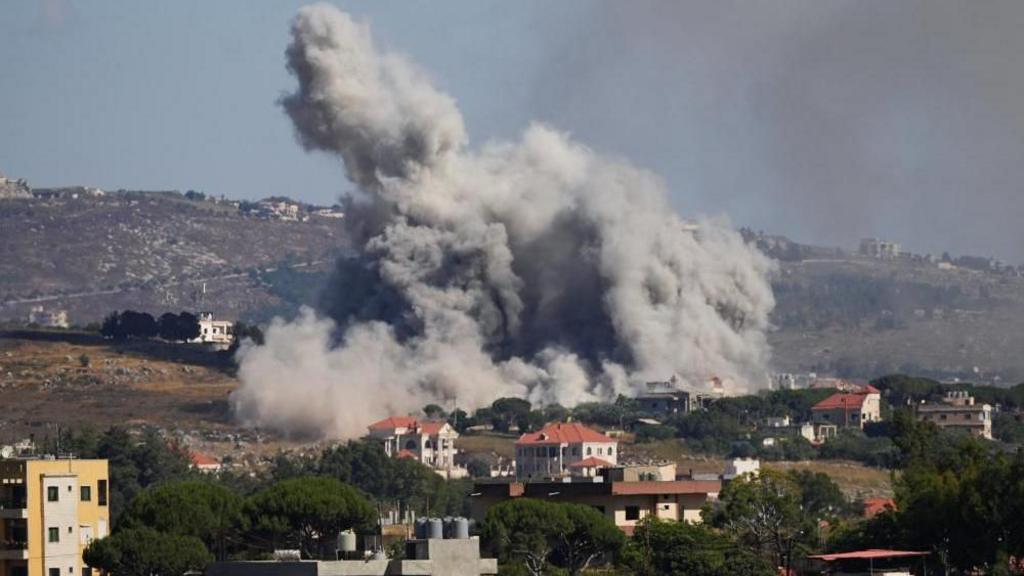
Source: www.bbc.com
The United States announced that Israel and Hezbollah have reached a ceasefire, a fragile pause in a conflict that has raged across the Lebanese‑Israeli border for months, while sporadic strikes continue to echo through Lebanon. Washington's envoy emphasized that the pause could create space for renewed diplomatic efforts aimed at limiting Iranian influence in the region.\n\nPolitically, the agreement reflects a reluctant acknowledgment that a prolonged exchange would jeopardise the broader diplomatic push to curb Iranian influence, a priority for the Biden administration. Internally, Israeli coalition partners are under pressure to demonstrate security gains, while Hezbollah faces domestic scrutiny after years of rocket fire that have strained Lebanon’s already fragile economy. Military considerations are stark: Israel seeks to degrade Hezbollah’s rocket arsenal and prevent cross‑border infiltrations, whereas Hezbollah aims to preserve its combat stature and avoid further civilian casualties that could erode its popular support.\n\nContextually, the truce follows a pattern of intermittent de‑escalations since the 2006 war, each fragile and quickly tested by regional spill‑overs, including the ongoing Syrian conflict and the humanitarian crisis in Lebanon. The United States, balancing its strategic rivalry with Iran and its commitment to Israel’s security, has acted as both broker and guarantor, a role that underscores its waning influence in a Middle East where power is increasingly multipolar and where Lebanon’s economic collapse amplifies the risk of renewed violence.\n\nLooking ahead, the durability of the ceasefire hinges on whether the parties can translate the pause into a lasting political settlement backed by robust monitoring mechanisms and credible economic incentives for Lebanon. Without such frameworks, the truce may serve only as a tactical respite, leaving the region poised for renewed volatility that could reverberate into broader US‑Iran negotiations and destabilise the already precarious balance in the Eastern Mediterranean.