Back to home
INTERNATIONAL18 March 2026
Strategic Destruction: Israel's Bridge Strikes in Southern Lebanon
Israel's destruction of river bridges in southern Lebanon represents a strategic escalation that disrupts Hezbollah operations while raising serious humanitarian concerns and risking further regional instability.
La
La Rédaction
The Vertex
5 min read
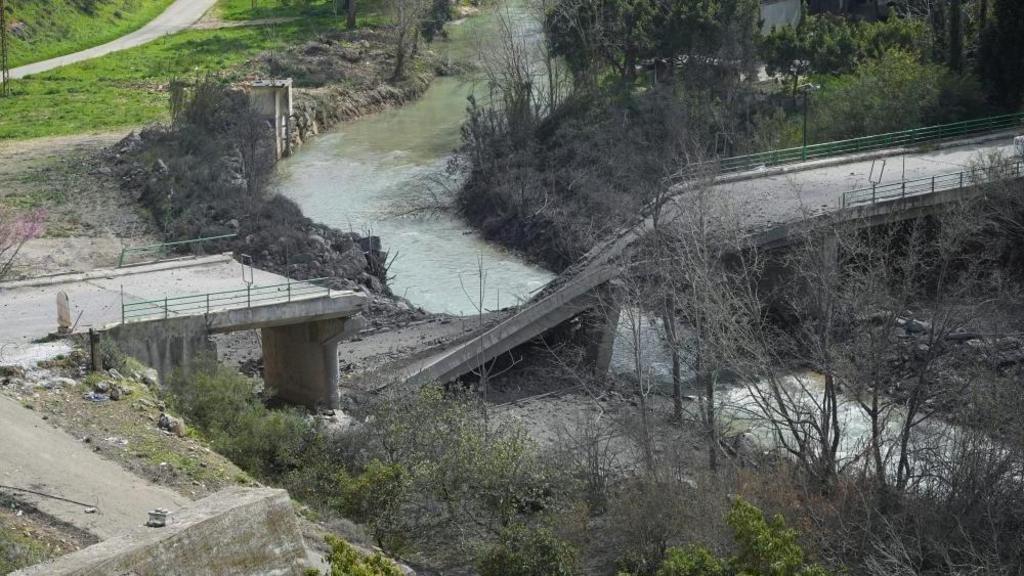
Source: www.bbc.com
In a significant escalation of tensions along the Israel-Lebanon border, Israeli forces have destroyed multiple river bridges in southern Lebanon, severely disrupting transportation and supply routes in the region. This military action, while tactical in nature, carries profound implications for the already fragile stability of the area.
The destruction of these critical infrastructure points comes amid a broader pattern of Israeli military operations aimed at limiting Hezbollah's operational capacity. By targeting river bridges, Israel effectively creates physical barriers that complicate the movement of personnel and equipment across the Litani River, a geographic feature that has historically served as a natural boundary between Israeli-controlled and Hezbollah-controlled territories.
This strategy, however, raises serious humanitarian concerns. The targeted bridges were vital for civilian transportation, medical evacuations, and the delivery of essential supplies to communities in southern Lebanon. The destruction of these crossings threatens to isolate villages and towns, potentially creating humanitarian crises that could further destabilize the region.
From a strategic perspective, Israel appears to be implementing a doctrine of gradual pressure, avoiding a full-scale invasion while maintaining a persistent military presence along the border. This approach allows Israel to respond to perceived threats while managing international diplomatic pressure. However, it also risks creating a protracted low-intensity conflict that could spiral into a more serious confrontation.
The international community faces a critical challenge in preventing this localized military action from escalating into a broader regional conflict. With civilian casualties already mounting—including the tragic loss of over 100 children since early March—the situation demands urgent diplomatic intervention to prevent further deterioration of an already volatile situation.