Back to home
INTERNATIONAL3 March 2026
Echoes of History: The Kuwait Base Attack and the Perilous Trajectory of US-Iran Relations
An Iranian missile strike on a US base in Kuwait has killed six soldiers, escalating tensions. The attack highlights the long-standing animosity between the US and Iran and raises concerns about a wider conflict.
La
La Rédaction
The Vertex
5 min read
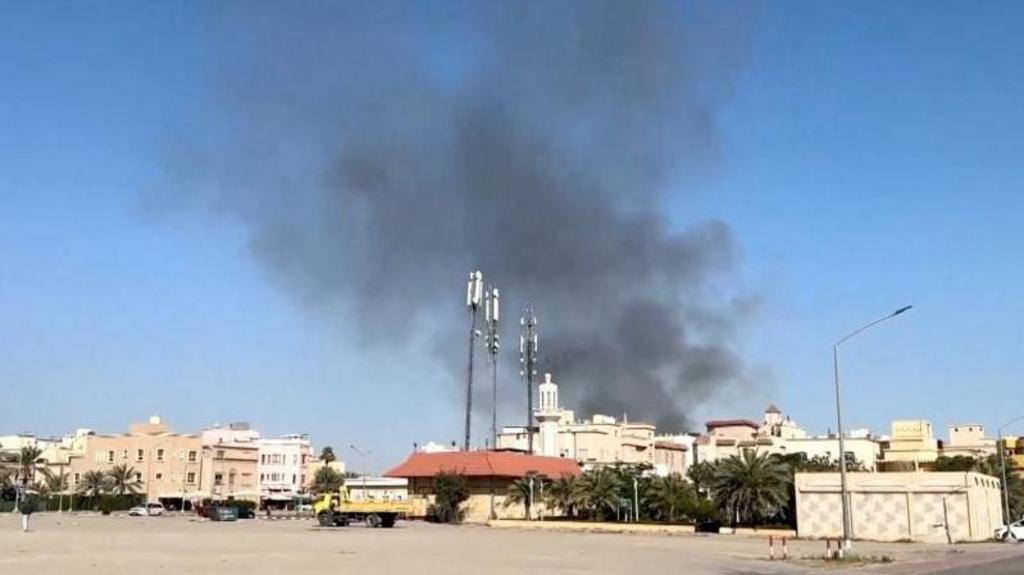
Source: www.bbc.com
The acrid smell of geopolitical volatility hangs heavy in the air following the recent Iranian missile strike on a US military base in Kuwait, an event that claimed the lives of six American soldiers and sent tremors through the already fragile landscape of US-Iranian relations. This incident, confirmed by the US Defense Secretary, is not merely an isolated act of aggression but a worrying escalation in a decades-long saga of mistrust, proxy conflicts, and simmering animosity.
The historical context is crucial to understanding the gravity of the situation. The 1979 Iranian Revolution, which ousted the US-backed Shah, marked a turning point, ushering in an era of profound ideological divergence and mutual suspicion. The hostage crisis at the US embassy in Tehran solidified the image of Iran as an intractable adversary in the American psyche. Subsequent events, including the Iran-Iraq War, the US military presence in the Persian Gulf, and allegations of Iranian support for terrorist groups, have only deepened the chasm.
The economic dimension further complicates matters. US sanctions, reimposed after Washington's withdrawal from the Joint Comprehensive Plan of Action (JCPOA), have crippled the Iranian economy, fueling resentment and a sense of desperation. While proponents of sanctions argue they are necessary to curb Iran's nuclear ambitions and destabilizing regional activities, critics contend they disproportionately harm the Iranian people and contribute to escalation.
Beyond the immediate casualties and physical damage, the attack on the Kuwait base carries significant strategic implications. It represents a direct challenge to American power and influence in the region, potentially emboldening other actors to test US resolve. It also raises serious questions about the effectiveness of existing deterrence strategies and the potential for miscalculation leading to a wider conflict.
The attack could be interpreted as a retaliatory measure for past actions, perhaps linked to covert operations or perceived slights. Iran operates within a framework of asymmetric warfare, often employing proxies and unconventional tactics to achieve its objectives. The choice of Kuwait, a long-standing US ally, as the target sends a clear message of defiance.
Looking ahead, the path forward is fraught with peril. De-escalation requires a concerted effort on both sides, involving genuine dialogue, verifiable commitments, and a willingness to address underlying grievances. The revival of the JCPOA, or the negotiation of an alternative agreement that addresses both nuclear proliferation and regional security concerns, remains a potential avenue for progress. However, given the current political climate in both the US and Iran, such a breakthrough appears increasingly unlikely.
The alternative is a continued cycle of escalation, with each incident provoking a response and pushing the two nations closer to the brink of outright war. The consequences of such a conflict would be catastrophic, not only for the region but for the global economy and international security. The time for statesmanship and strategic thinking is now, before the echoes of history turn into the deafening roar of conflict. The international community must step in, promoting dialogue and seeking common ground to navigate this dangerous juncture.