Back to home
INTERNATIONAL3 May 2026
Iran's Latest Peace Gambit: A Test of U.S. Credibility
Iran has offered a new peace proposal while the United States has yet to confirm any response, prompting Trump to call it unacceptable. The diplomatic stalemate highlights deep geopolitical tensions and the uncertain path toward regional stability.
La
La Rédaction
The Vertex
5 min read
Source: www.bbc.com
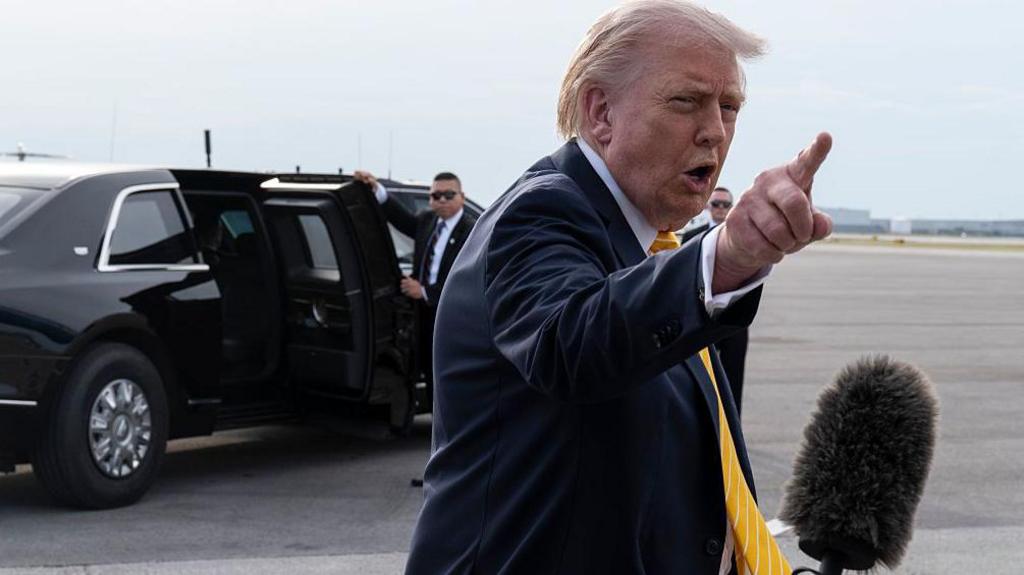
Iran has tabled a new peace proposal, seeking to revive diplomatic momentum after years of stalemate, while the United States has offered only a vague, non-committal signal, prompting Donald Trump to label the overture "unacceptable" in a recent interview with Israel's Kan News.
The lack of a formal reply underscores a deeper strategic calculus: Tehran aims to leverage the proposal to ease sanctions and curb isolation, whereas Washington remains wary of legitimizing a regime whose nuclear activities and regional proxy behavior continue to destabilize the Middle East. A definitive response would test the credibility of U.S. foreign policy, potentially emboldening Iran's hardliners or opening a narrow corridor for confidence-building measures.
Contextualizing this exchange reveals a long-standing pattern: from the 2015 nuclear accord to the 2018 withdrawal, each diplomatic overture has been met with reciprocal skepticism, reflecting both domestic political constraints in the United States and Tehran's insistence on reciprocal concessions.
Looking ahead, the United States' response will likely be shaped by internal political dynamics, the influence of Israel's security concerns, and the broader push for a managed détente that could pave the way for a renewed nuclear framework or, conversely, a rapid escalation of hostilities. Moreover, the timing coincides with heightened regional tensions over maritime traffic in the Strait of Hormuz, amplifying the strategic stakes.
Economically, Iran's proposal seeks to unlock frozen assets and attract foreign investment, hoping to alleviate the chronic inflation and unemployment that fuel public discontent. A U.S. acknowledgment, even symbolic, could trigger a modest easing of secondary sanctions, thereby stabilizing markets in the Gulf and reducing the risk of proxy conflicts that threaten neighboring states.