Back to home
INTERNATIONAL1 June 2026
Escalation in the Gulf: A New Chapter of US-Iran Air Strikes
The United States and Iran have exchanged precision air strikes on military sites around the Strait of Hormuz, signalling a dangerous shift from proxy to direct confrontation. The move raises economic, security and diplomatic stakes in a region already fraught with tension.
La
La Rédaction
The Vertex
5 min read
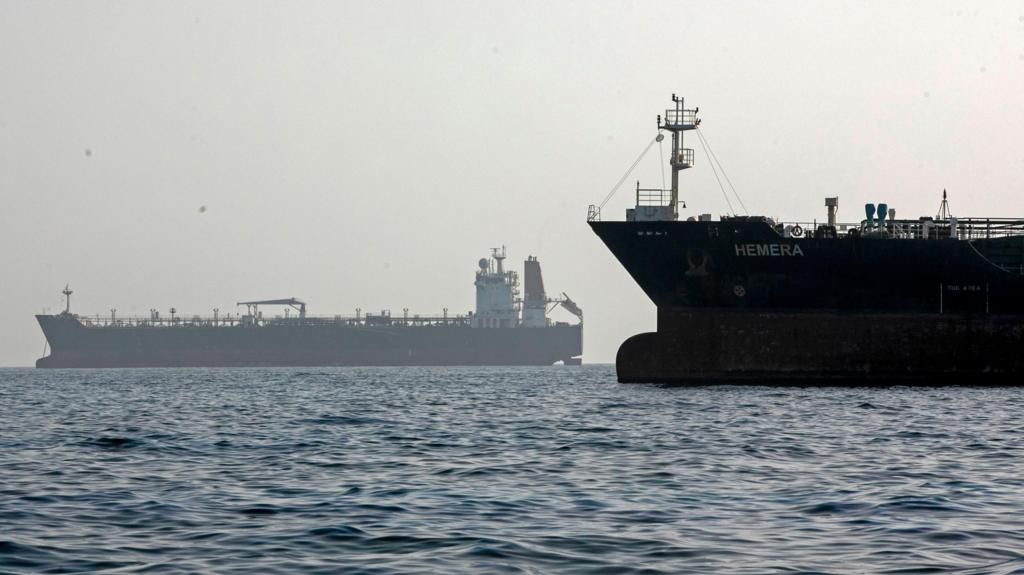
Source: www.bbc.com
An unexpected flare‑up has erupted in the Strait of Hormuz, as the United States and Iran each announced a fresh round of precision air strikes against military installations on opposite shores. The operation, described by Washington as a direct response to Tehran’s alleged provocations, marks a dangerous escalation in a region already strained by years of covert confrontation.
The strikes underscore a shift from proxy warfare to overt kinetic action, signalling that both capitals are willing to risk direct military exposure. For Iran, targeting a US‑linked radar site demonstrates a willingness to challenge American dominance, while for the United States, hitting an Iranian air‑defence battery serves as a warning to Tehran’s regional ambitions. The move could embolden other actors in the Gulf, from Saudi Arabia to private security firms, to reassess their own security calculations.
Economically, the incident reverberates through global energy markets. The Strait of Hormuz handles roughly a fifth of world oil shipments; heightened risk premiums on war‑risk insurance and a potential slowdown in tanker traffic could push crude prices higher, affecting inflationary pressures worldwide. Investors are already watching for signs of a broader conflict that might disrupt supply chains beyond the immediate theater.
Historically, this escalation follows a pattern of reciprocal posturing that began with the 2019 tanker seizures and the 2020 killing of Qasem Soleimani. Each episode has tested the durability of the 2015 nuclear deal and the willingness of external powers to intervene militarily. The current exchange shows diplomatic channels once used to temper tension are now strained, narrowing the margin for de‑escalation.
The future hinges on whether diplomatic actors, especially the EU and Gulf states, can broker a cooling‑off. If the strikes are seen as symbolic rather than existential, a temporary cease‑fire may follow; miscalculation could trigger a cascade of retaliatory measures, deepening the crisis and reshaping the security architecture of the Persian Gulf.