Back to home
INTERNATIONAL8 June 2026
Iran's Calculated Strike: A Sign of Regime Resilience
Iran’s direct missile strike on Israel signals a strategic shift, suggesting the regime views its position as more assertive than ever. The move risks derailing fragile peace talks and may herald a new phase of regional tension.
La
La Rédaction
The Vertex
5 min read
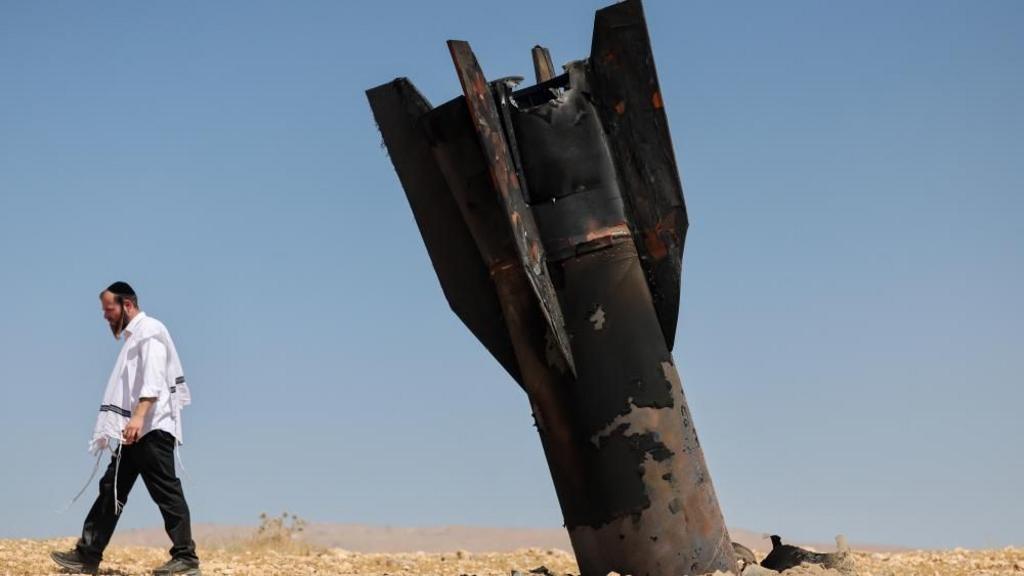
Source: www.bbc.com
In early April, Tehran launched a direct missile strike against Israel, a move that starkly contradicts the diplomatic overtures that have characterized recent months. The operation, carried out from Iranian soil, signals a decisive shift in the Islamic Republic’s strategic posture, suggesting that its leadership now perceives its position as more assertive than ever before.
The strike reflects Tehran’s calculation that the window for diplomatic engagement is narrowing, prompting a display of military capability to deter further isolation. By risking the collapse of fragile peace talks, Iranian officials aim to reinforce domestic legitimacy and project strength to both regional rivals and the United States, whose pressure on Tehran’s nuclear program remains intense. Moreover, the timing coincides with internal political turbulence in Tehran, where factions vie for influence ahead of parliamentary elections, amplifying the regime’s desire to showcase resolve.
This strike mirrors Tehran’s 2020 response after the killing of Qasem Soleimani, when proxy attacks signaled resolve. The escalation now unfolds amid stalled JCPOA negotiations, intensified Israeli operations in Gaza, and a US administration trying to balance deterrence with diplomacy, all of which hinder a return to détente. Regionally, the war in Syria, shifting Gulf alignments, and Iranian‑backed militias heighten the risks of any direct clash.
Looking ahead, the strike may embolden hardliners within Iran, tightening the political space for compromise, while simultaneously prompting a more robust Israeli response that could spiral into a broader confrontation. The coming weeks will test whether Tehran’s calculated risk translates into strategic gain or further entrenches regional instability, shaping the trajectory of Middle‑East diplomacy for years to come. If diplomatic channels remain closed, the incident could precipitate a new cycle of retaliation, forcing external powers to reconsider their engagement strategies.