Back to home
INTERNATIONAL3 July 2026
A Nation's Grief: Iran Opens Public Mourning for the Ayatollah
Iran begins a public mourning period for the Ayatollah killed in February, with his body to lie in state at Tehran’s Grand Mosalla before a days‑long funeral.
La
La Rédaction
The Vertex
5 min read
Source: www.bbc.co.uk
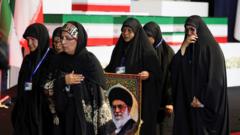
On Friday, Iran will open its doors to a public lying‑in‑state for the Ayatollah whose assassination in February sent shockwaves through the Islamic Republic. The body of the cleric, identified in official statements as the late Ayatollah Ali Khamenei’s predecessor in the supreme leadership, will be displayed at Tehran’s Grand Mosalla, a venue traditionally reserved for the most solemn state ceremonies. The announcement marks the beginning of a series of funeral rites that will extend over several days, underscoring the regime’s intention to transform grief into a unifying national narrative.
Politically, the mourning ritual serves multiple strategic purposes. By foregrounding the deceased’s stature, the authorities aim to reinforce the legitimacy of the current leadership, especially as the nation grapples with economic strain and internal dissent. The prolonged funeral procession also offers a stage for mobilizing loyalist factions, showcasing the continuity of the revolutionary ethos, and reasserting the supreme leader’s centrality in Iran’s ideological framework.
Contextually, the killing of an Ayatollah in February is unprecedented in modern Iran, where religious leaders have long been shielded by opaque security arrangements. Past instances of high‑profile assassinations, such as the 2008 murder of a senior cleric, triggered brief periods of public outcry but ultimately consolidated state control. The current response, therefore, reflects a calculated effort to pre‑empt any perception of vulnerability while reaffirming the regime’s capacity to orchestrate collective mourning.
Looking ahead, the extended funeral rites may serve as a barometer for public sentiment. If the state can channel collective grief into renewed loyalty, it could stabilize its political standing amid regional tensions and domestic challenges. Conversely, any friction arising from the manner of the ceremony or perceived restrictions on participation might expose fissures within Iranian society, offering insight into the durability of the theocratic system.