Back to home
INTERNATIONAL3 July 2026
A Nation in Mourning: The Political Reverberations of an Ayatollah’s February Death
On Friday, the body of the late Ayatollah killed in February will be placed in state at Tehran’s Grand Mosalla, marking the start of a week‑long public mourning period. The ceremony underscores the regime’s effort to turn a sudden loss into a unifying national narrative while reinforcing Ali Khamenei’s political authority ahead of the supreme leader succession process.
La
La Rédaction
The Vertex
5 min read
Source: www.bbc.co.uk
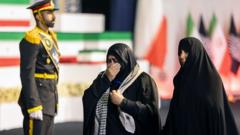
On Friday, the body of the Ayatollah killed in February will be laid out in state at Tehran’s Grand Mosalla, inaugurating a series of public mourning rituals that will span several days. The deceased, a senior member of the Assembly of Experts whose death under mysterious circumstances provoked immediate condemnation from the United Nations, has already sparked street vigils and an outpouring of online tributes across Iran, underscoring the symbolic weight of his role in the country’s religious hierarchy.
The ceremony serves a dual purpose: it offers the regime a platform to reaffirm its ideological continuity while simultaneously consolidating Ali Khamenei’s political capital. By presiding over the funeral rites and overseeing the subsequent selection of the next supreme leader by the Assembly of Experts, Khamenei can steer the transition, ensuring that any successor remains loyal to the current power structure and to the principle of Velayat‑e Faqih, even as internal debates about succession intensify amid sanctions‑driven economic strain.
Historically, Iran has turned the death of senior clerics into a rallying point for national unity and regime legitimacy. The 1989 period following Ayatollah Khomeini’s passing witnessed massive public ceremonies that entrenched the theocratic identity, while the 2020 funeral of Ayatollah Mohammad‑Taqi Mesbah‑Yazdi exposed fissures between hard‑liners and reformist elements, reflecting broader societal tensions. This latest event occurs against a backdrop of heightened economic pressure from international sanctions, a deteriorating currency, and a youthful population increasingly demanding transparency and accountability.
Observers caution that the extended public mourning may both suppress dissent and test the loyalty of rival clerical factions, thereby influencing the calculus of Iran’s upcoming leadership transition and potentially reshaping its regional posture amid ongoing sanctions and domestic economic strain.