Back to home
INTERNATIONAL7 July 2026
A Calculated Farewell: Iran’s Spectacle of Mourning and Hidden Revenge
Three days of state‑orchestrated mourning in Tehran turned the capital into a political stage, as Iran’s leadership used the funeral of Supreme Leader Ali Khamenei to signal resistance and promise retribution. The BBC’s Lyse Doucet reported that the prolonged display was intended to rally domestic support and project an unyielding image abroad.
La
La Rédaction
The Vertex
5 min read
Source: www.bbc.co.uk
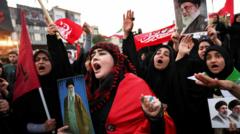
For three consecutive days, Tehran’s streets were draped in black banners and the city’s central squares filled with mourners paying tribute to Ayatollah Ali Khamenei, the supreme leader whose health has become a matter of national speculation. The BBC’s Lyse Doucet observed that the prolonged public mourning was less a spontaneous outpouring than a carefully staged political tableau, designed to project unity and resolve to both domestic audiences and the wider world.
The spectacle functioned as a calculated message: Iran’s leadership signaled that any attempt to undermine its authority would be met with steadfast resistance, while simultaneously promising retribution for perceived slights. By extending the mourning period, officials amplified the narrative of an unbreakable revolutionary legacy, using the ritual of collective grief to reinforce loyalty among security forces and the clergy, and to deter dissenters who might exploit the moment of vulnerability.
Historically, Iran has leveraged state funerals to cement ideological narratives, as seen after the 1979 revolution and the 2020 killing of General Soleimani. The current display follows this pattern, juxtaposing personal loss with collective purpose, while also addressing external pressures such as sanctions and diplomatic isolation. The timing, coinciding with heightened regional tensions, underscores a desire to rally domestic support and project an image of unyielding resolve to adversaries.
Looking ahead, the prolonged mourning may serve as a prelude to a more assertive foreign policy, as the regime seeks to consolidate internal legitimacy before navigating upcoming elections and potential leadership transitions. Whether this theatrical farewell translates into sustained political capital or merely masks deeper fractures remains to be seen.