Back to home
INTERNATIONAL1 June 2026
Satellite Evidence Reveals Scale of Iran's Strikes on U.S. Installations
Satellite imagery confirms that Iran has hit at least twenty U.S. military sites since early 2024, far exceeding official claims. The scale of the damage forces a strategic reassessment and highlights the financial and psychological costs of the campaign.
La
La Rédaction
The Vertex
5 min read
Source: www.bbc.com
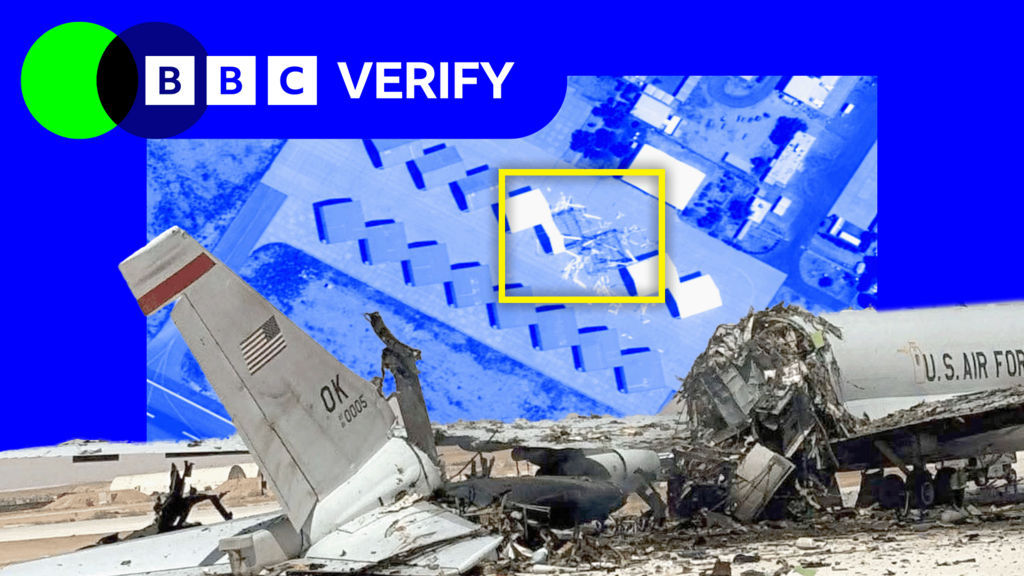
Satellite imagery released this week confirms that Iran has struck at least twenty United States military facilities since the conflict escalated in early 2024, far exceeding official acknowledgments.
The visual evidence, captured by high‑resolution commercial satellites, reveals craters, scorched earth and damaged infrastructure across airbases in Iraq, Syria and the Persian Gulf, indicating a sustained campaign rather than isolated incidents.
The scale of the damage forces a reassessment of U.S. force protection and force‑posture strategies. While the physical destruction remains limited, the psychological impact is significant, signalling Tehran’s willingness to target American personnel far from the Iranian border. Moreover, the attacks strain logistics, as reconstruction efforts divert resources that could be allocated to other theaters. Estimates suggest reconstruction costs could exceed $300 million, highlighting the economic strain of maintaining forward bases in contested zones.
Contextualising these strikes within the broader Iran‑U.S. rivalry reveals a pattern of escalation since the withdrawal from the 2015 nuclear agreement. Tehran has increasingly relied on proxy militias to exact retaliation, blurring the line between state‑directed and non‑state action. This dynamic mirrors earlier confrontations in the Gulf, where covert operations have shaped strategic calculations. The campaign also tests the cohesion of the U.S.-led coalition in the region, as partner nations reassess their own security commitments amid rising Iranian assertiveness.
Looking ahead, the United States faces a dilemma: a measured response that avoids further escalation, or a more robust posture that risks spiralling into a wider conflict. Diplomatic channels remain constrained, yet the data suggest that Iran’s campaign may compel a recalibration of regional security policies and could accelerate negotiations toward de‑escalation. If Washington chooses a calibrated response, it may open a narrow window for dialogue, whereas a hardline approach could trigger reciprocal strikes that further destabilise the already fragile balance.