Back to home
INTERNATIONAL2 March 2026
Nuclear Renaissance: India and Canada's Strategic Rapprochement
India and Canada have reset ties with a landmark nuclear energy deal. This signifies a strategic realignment and a thaw in relations following India's 1974 nuclear tests, with significant economic and geopolitical implications for both nations, particularly in the context of energy security and regional balance of power.
La
La Rédaction
The Vertex
5 min read
Source: www.bbc.com
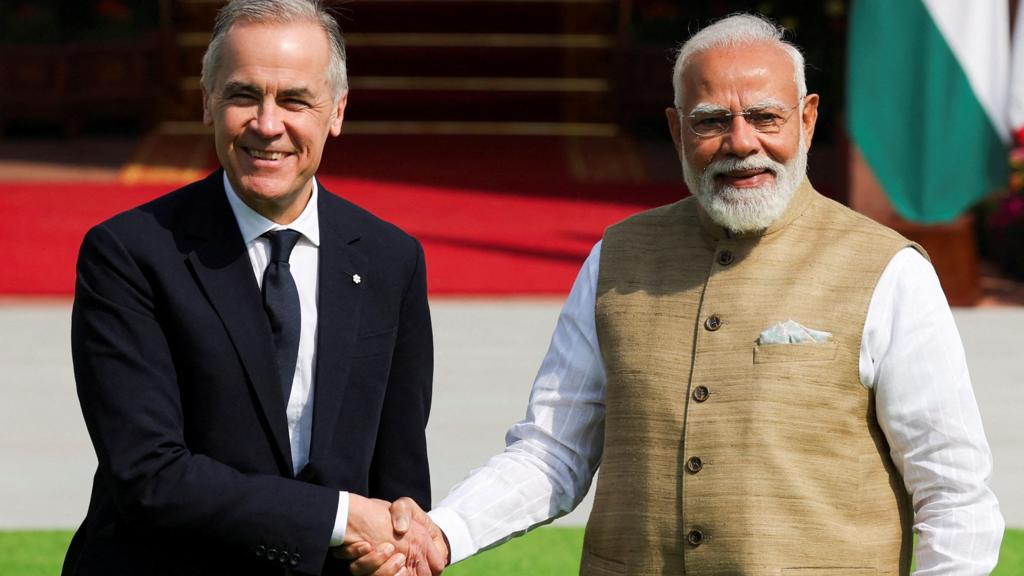
The hushed halls of power in Delhi recently played host to a meeting that transcended mere diplomatic pleasantries, a tête-à-tête between Narendra Modi and Mark Carney, former Governor of both the Bank of Canada and the Bank of England. This encounter culminated not only in a reaffirmation of ties between India and Canada but also in a series of landmark agreements, chief among them a deal to supply India with Canadian uranium. This agreement, while seemingly straightforward, represents a significant strategic realignment amid shifting geopolitical sands.
The historical backdrop to this agreement is crucial. Canada, once a key partner in India's nascent nuclear program in the 1950s, severed ties following India's 1974 nuclear tests, triggered by the use of Canadian technology. The ensuing decades were marked by a chill in relations, a consequence of Canada's staunch non-proliferation stance. The current agreement, therefore, symbolizes a thaw, an acknowledgment of India's growing global stature and its responsible stewardship of its nuclear arsenal, despite not being a signatory to the Treaty on the Non-Proliferation of Nuclear Weapons (NPT).
The economic implications of this nuclear deal are considerable. India's burgeoning energy needs, fueled by its rapidly expanding economy and population, necessitate diversification of its energy sources. Nuclear power, with its relatively low carbon footprint, presents an attractive alternative to fossil fuels, aligning with India's commitments under the Paris Agreement. Canadian uranium, known for its quality and reliability, offers a stable supply chain for India's nuclear reactors, reducing its dependence on other suppliers.
Beyond economics, the agreement also carries significant geopolitical weight. It strengthens the strategic partnership between India and Canada, two nations committed to democratic values and a rules-based international order. This partnership serves as a counterweight to the rising influence of China in the Indo-Pacific region, providing a platform for cooperation on issues ranging from maritime security to climate change. Moreover, it signals a broader realignment of alliances in a multipolar world, where nations are increasingly forging partnerships based on shared interests rather than rigid ideological alignments.
However, the deal is not without its potential pitfalls. Concerns about nuclear proliferation, albeit muted, are likely to resurface, particularly from critics who question India's commitment to non-proliferation. Furthermore, the environmental impact of uranium mining and nuclear power generation will need careful consideration to ensure sustainable development. The long-term success of this agreement hinges on transparency, robust regulatory frameworks, and a commitment to the highest standards of nuclear safety and security.
Looking ahead, the India-Canada nuclear deal could serve as a template for other nations seeking to forge strategic partnerships in the energy sector. It underscores the importance of trust, transparency, and a shared vision for a sustainable future. Whether this marks the beginning of a broader strategic alliance, or a limited episode, remains to be seen. The true legacy of this rapprochement will depend on the commitment of both nations to navigate the complexities of the 21st-century geopolitical landscape with wisdom and foresight.