Back to home
INTERNATIONAL14 July 2026
The Unraveling of Hungary’s Ceremonial Crown: Parliament’s Move to Dethrone the President
Parliament voted to remove President Tamás Sulyok, a longtime ally of Viktor Orbán, marking a decisive shift in Hungary’s political balance. The move raises questions about constitutional checks, EU oversight, and the future of Orbán’s influence.
La
La Rédaction
The Vertex
5 min read
Source: www.bbc.co.uk
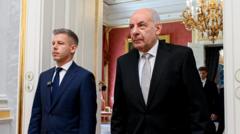
Budapest’s National Assembly voted on July 13, 2026 to strip President Tamás Sulyok of his office, a move that marks an unprecedented assertion of parliamentary authority over the head of state.
Sulyok, long regarded as a staunch ally of Viktor Orbán, entered the presidency in 2022 after the former prime minister’s 16‑year tenure ended in April.
His removal signals a deliberate attempt by the current governing coalition to rewrite the symbolic balance of power and to reaffirm its dominance now that Orbán himself has stepped back from day‑to‑day leadership.
The president in Hungary serves mainly ceremonial functions, yet the constitution grants the parliament the power to dismiss him under specific conditions.
Sulyok’s ouster therefore reverberates beyond protocol, touching on broader questions about checks and balances, the concentration of executive influence, and the durability of Orbán’s political network.
Looking ahead, the decision may embolden the ruling party to further centralise authority, while also inviting scrutiny from the European Union over constitutional backsliding.
European institutions have already flagged Hungary’s recent constitutional amendments as potential breaches of democratic norms, and the parliamentary move could intensify that scrutiny.
Domestically, opposition parties warn that the vote undermines the symbolic separation of powers and may set a precedent for further erosions of civil liberties.
Analysts suggest that the episode reflects a broader strategy to cement the ruling coalition’s influence ahead of the next electoral cycle, using institutional levers rather than overt political battles.