Back to home
INTERNATIONAL14 April 2026
Hamas's Rejection of Gaza Disarmament: A Stalemate in Middle East Peace Efforts
Hamas has rejected Gaza disarmament talks, demanding Israel first comply with existing commitments. This stance reflects deep mistrust and internal Palestinian divisions, complicating peace efforts.
La
La Rédaction
The Vertex
5 min read
Source: www.bbc.com
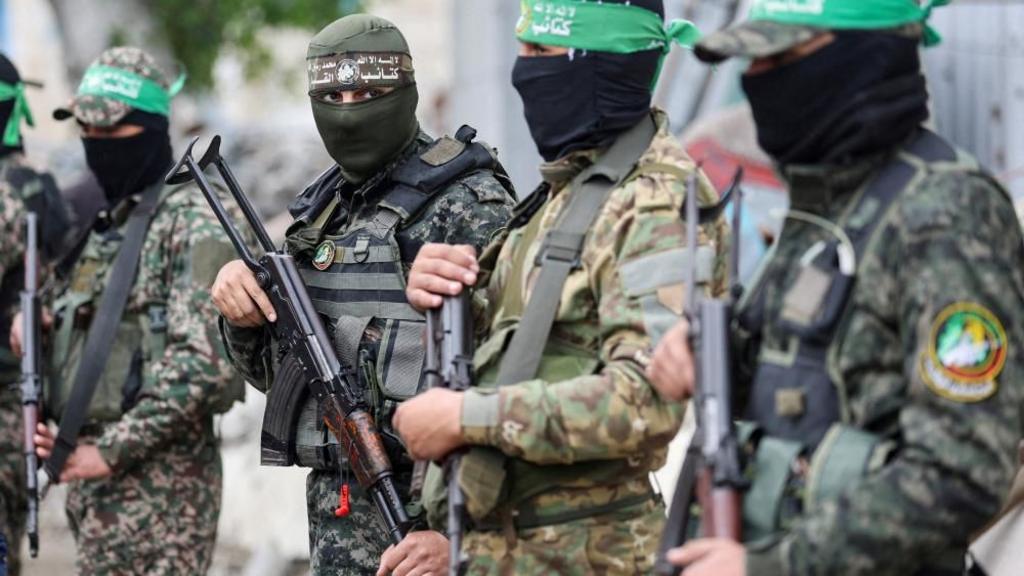
The recent refusal by Hamas to engage in disarmament talks marks another significant setback in the protracted Israeli-Palestinian conflict. According to a Palestinian official speaking to the BBC, the armed group has made it clear that negotiations will remain at a standstill until Israel fully honors its existing commitments. This position underscores the deep-seated mistrust and the complex web of grievances that continue to fuel tensions in the region.
Hamas's stance is not merely a tactical maneuver but a reflection of the broader political and humanitarian crisis in Gaza. The group, which has long been designated as a terrorist organization by several countries, including the United States and the European Union, has consistently demanded the lifting of the blockade on Gaza as a precondition for any meaningful dialogue. The blockade, imposed by Israel and Egypt, has severely restricted the movement of people and goods, exacerbating the already dire humanitarian situation in the enclave.
The rejection of disarmament talks also highlights the internal divisions within the Palestinian leadership. While the Palestinian Authority, based in the West Bank, has pursued a more moderate approach, Hamas's hardline position reflects the divergent strategies within the Palestinian political landscape. This fragmentation complicates efforts by international mediators to broker a lasting peace agreement.
Looking ahead, the prospects for a resolution appear bleak. The international community, including the United Nations and key regional players, faces the daunting task of bridging the gap between the two sides. Without a concerted effort to address the root causes of the conflict, including security concerns, economic hardships, and political aspirations, the cycle of violence and mistrust is likely to persist. The rejection of disarmament talks is a stark reminder that peace in the Middle East remains an elusive goal, contingent on the willingness of all parties to engage in good faith negotiations.