Back to home
INTERNATIONAL2 April 2026
When Nature's Extremes Collide: Greece's Dual Crisis of Floods and Dust
Deadly flooding near Athens and a massive Saharan dust storm over Crete highlight Greece's vulnerability to climate extremes. The dual disasters underscore urgent needs for infrastructure resilience and climate adaptation strategies.
La
La Rédaction
The Vertex
5 min read
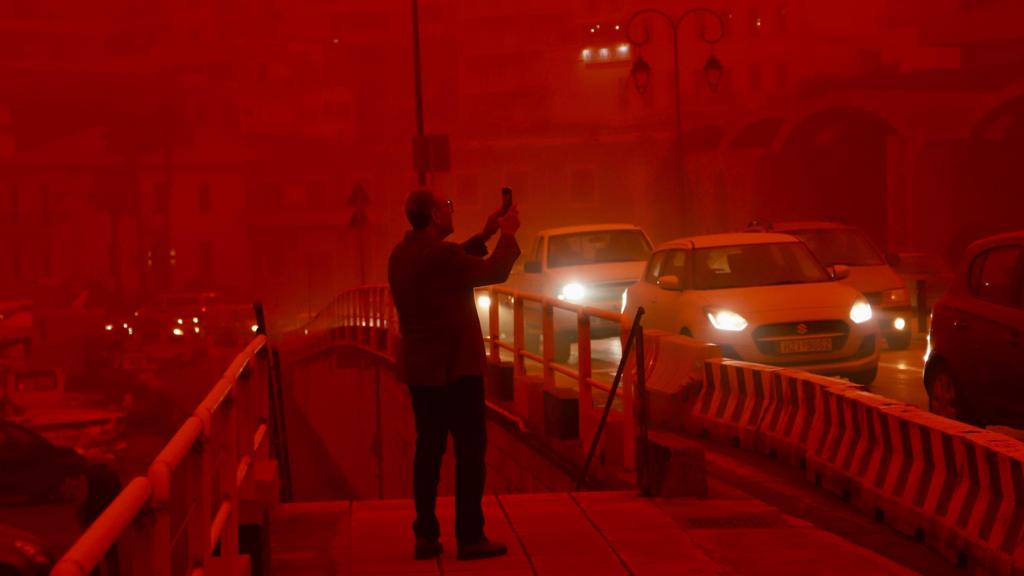
Source: www.bbc.com
Greece faces a devastating convergence of natural disasters as torrential rains trigger deadly flooding near Athens while a massive Saharan dust storm engulfs Crete. The death of a man in flood waters near the capital highlights the immediate human toll, while the atmospheric phenomenon across the Aegean islands signals broader environmental shifts.
The flooding represents Greece's latest encounter with extreme precipitation events that have grown increasingly frequent in recent years. Urban infrastructure, particularly in the Athens metropolitan area, struggles to cope with sudden deluges that overwhelm drainage systems designed for a different climatic era. The tragedy near Athens underscores the vulnerability of communities situated in flood-prone zones, where rapid urbanization has often encroached upon natural watercourses.
Meanwhile, the Saharan dust phenomenon, while not unprecedented, demonstrates the far-reaching impacts of desertification and changing wind patterns. The dust cloud, carried thousands of kilometers across the Mediterranean, affects air quality, agricultural productivity, and even solar energy generation. For Crete, the thick haze obscures visibility and poses respiratory health risks, particularly for vulnerable populations.
These simultaneous crises reveal the interconnected nature of climate-related disasters. The Mediterranean region stands at the forefront of climate change impacts, experiencing both increased precipitation extremes and atmospheric alterations that transport desert conditions northward. As Greece confronts these challenges, questions emerge about infrastructure resilience, emergency preparedness, and the long-term adaptation strategies needed for a warming world where such dual disasters may become increasingly common.
The human cost of this week's events serves as a stark reminder that climate change manifests not as distant projections but as immediate, deadly realities requiring urgent policy responses and community-level adaptation measures.