Back to home
POLITICS3 May 2026
Strategic Retreat: How Germany’s Troop Reductions Undermine NATO Deterrence
Republican leaders warn that cutting 5,000 U.S. troops from Germany undermines NATO deterrence and sends a risky signal to Moscow, raising concerns about alliance cohesion and European security.
La
La Rédaction
The Vertex
5 min read
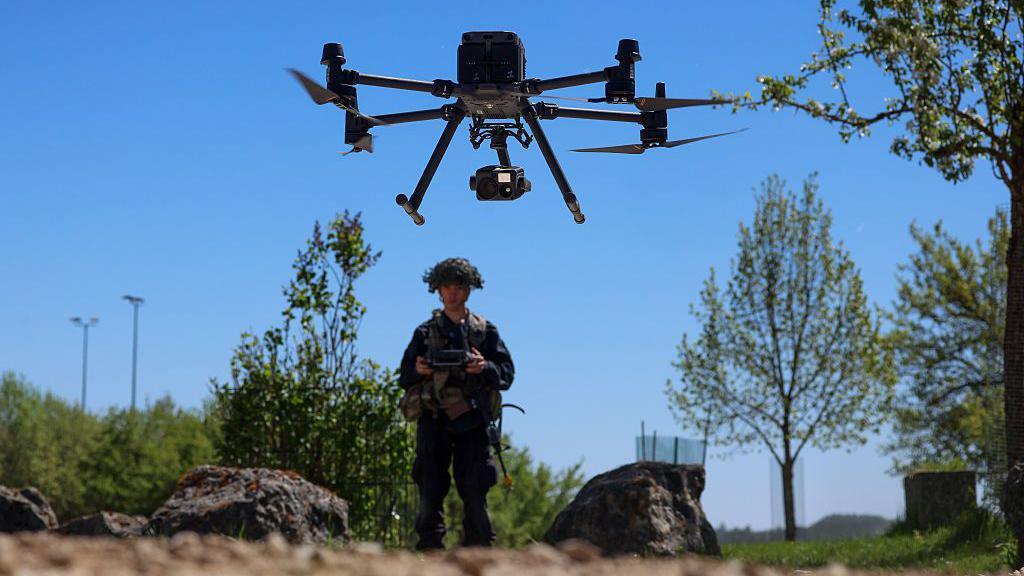
Source: www.bbc.com
Washington’s top Republican leaders of the House and Senate armed services committees have warned that the planned withdrawal of roughly 5,000 U.S. troops from Germany sends a dangerous signal to Moscow. The move, presented as a cost‑saving measure, threatens the credibility of NATO’s collective defence posture at a time when Russia’s aggressive posturing in Ukraine and the Baltic region has revived Cold‑War anxieties.\n\nPolitically, the bipartisan alarm underscores a rare consensus that force posture, not fiscal austerity, should dictate security policy. The committees argue that reducing forward presence erodes deterrence, emboldens Russian calculations, and weakens the assurance given to allies that the United States remains a steadfast guarantor. Economically, the cut reflects broader Pentagon attempts to reallocate resources toward Indo‑Pacific competition, yet it risks sacrificing strategic depth in Europe for short‑term budgetary relief. Socially, the decision fuels domestic debates over the burden of overseas commitments and the perception of American resolve, potentially affecting recruitment and morale among troops stationed abroad.\n\nHistorically, the United States has maintained a sizeable garrison in Germany since the end of World War II, a cornerstone of NATO’s rapid‑reaction capability. The post‑Cold‑War drawdowns of the 1990s already trimmed forces, but the current proposal represents a deeper rupture, coinciding with heightened Russian military modernization and the alliance’s 2022 reinforcement plans. This juxtaposition highlights a broader trend: the United States is rebalancing global commitments while Europe seeks to assume greater responsibility, a shift that could reshape burden‑sharing dynamics.\n\nLooking ahead, the signal of reduced American presence may compel NATO to accelerate European troop contributions, deepen missile‑defence deployments, and pursue diplomatic channels to manage Russian escalation. If the withdrawal proceeds without compensatory measures, deterrence credibility could be compromised, raising the risk of miscalculation in a volatile security environment.