Back to home
INTERNATIONAL2 March 2026
Macron's Nuclear Gambit: Extending France's Deterrent, Reshaping European Security
President Macron offers France's nuclear deterrent to European allies. This move aims to bolster European security but faces challenges regarding trust, US relations, and strategic autonomy.
La
La Rédaction
The Vertex
5 min read
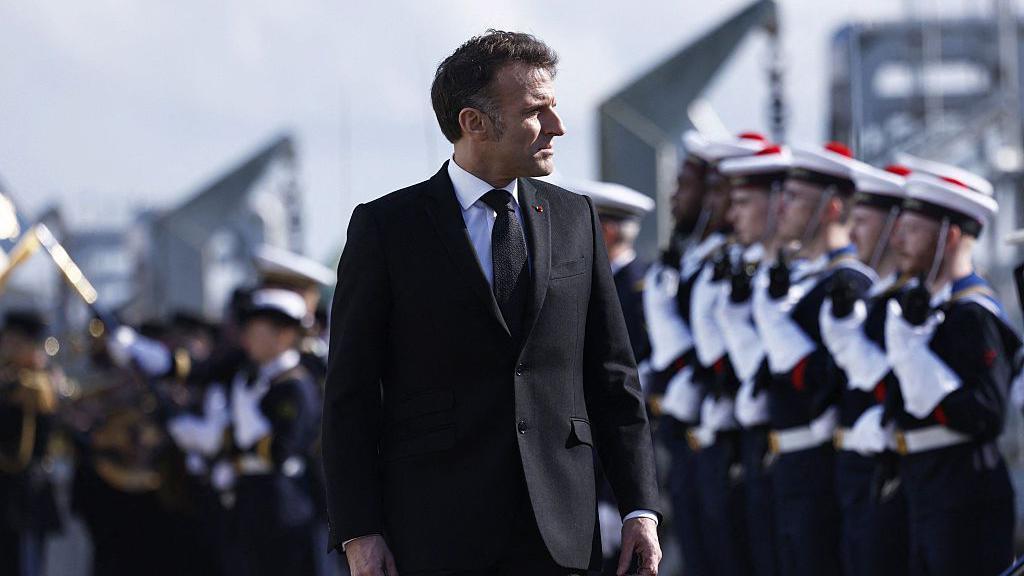
Source: www.bbc.com
In a move resonating with both historical echoes and future uncertainties, French President Emmanuel Macron has declared his willingness to extend France's nuclear deterrent umbrella to select European allies. This announcement, while couched in terms of shared security and strategic autonomy, raises profound questions about the future of European defense, the transatlantic alliance, and the very nature of nuclear deterrence in the 21st century.
The offer, extended to eight unnamed European nations, represents a significant shift in French nuclear doctrine. Historically, France's force de frappe has been strictly a national asset, conceived during the Cold War to guarantee France's independence and sovereignty. Charles de Gaulle, the architect of this strategy, envisioned a France capable of acting autonomously on the world stage, unbound by the constraints of Cold War bloc politics. Macron’s proposition arguably inverts this Gaullist principle, suggesting a willingness to integrate France's nuclear capabilities into a broader European security framework. However, the caveat that Paris retains exclusive decision-making power underscores the enduring commitment to national sovereignty.
The geopolitical context is crucial. Russia's ongoing aggression in Ukraine has shattered long-held assumptions about European security and exposed vulnerabilities in NATO's eastern flank. While NATO remains the cornerstone of European defense, Macron’s initiative can be interpreted as an attempt to strengthen Europe's strategic autonomy and reduce its reliance on the United States. This ambition aligns with Macron's broader vision of a more assertive European Union, capable of defending its interests and projecting power on the global stage.
However, Macron's offer is not without its drawbacks. The lack of transparency regarding the specific nations included and the precise terms of the extended deterrence creates potential for division and mistrust within Europe. Some nations, particularly those closer to Russia, may view the French offer with skepticism, preferring the certainty of the NATO umbrella. Others may resent the implications of French dominance in European defense policy.
Moreover, the reaction from the United States remains uncertain. While Washington has long encouraged greater European burden-sharing, it may view a French-led nuclear initiative as a challenge to its leadership within NATO. The potential for friction between the US and France could undermine the unity of the transatlantic alliance, particularly at a time when it is most needed.
Looking ahead, the success of Macron's nuclear gambit hinges on several factors. First, France must cultivate trust and transparency with its European allies. Second, it must manage its relationship with the United States carefully, avoiding any actions that could fracture the transatlantic alliance. Finally, it must demonstrate a credible commitment to the extended deterrence, ensuring that its nuclear capabilities remain effective and its political will unwavering. If successful, Macron's initiative could mark a profound shift in European security, ushering in a new era of strategic autonomy and shared responsibility. If it fails, it risks exacerbating divisions within Europe and undermining the credibility of the Western alliance.