Back to home
INTERNATIONAL7 July 2026
When Survival Tastes Like Ketchup: The 32‑Hour Ordeal of a Venezuelan Girl
A 12‑year‑old girl survived 32 hours trapped beneath a collapsed ten‑storey building in Caracas after two June earthquakes, telling rescuers she had eaten ketchup and cheese. Her ordeal highlights the fragility of Venezuela’s infrastructure and the urgent need for improved disaster response.
La
La Rédaction
The Vertex
5 min read
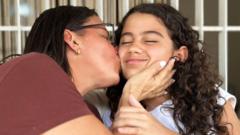
Source: www.bbc.co.uk
Fabiana, a 12‑year‑old girl from Caracas, survived 32 hours trapped beneath the concrete of a ten‑storey residential tower that collapsed during two successive earthquakes in June. In the midst of the debris she told rescuers, I ate ketchup and cheese, a stark testament to the desperation and surreal normalcy that can persist even in catastrophe.
The twin tremors, measuring 5.5 and 5.2 on the Richter scale, struck the Capital District on June 4 and June 5, 2026, toppling dozens of structures in a city already strained by chronic under‑investment. Engineers attribute the rapid collapse to a combination of substandard construction, over‑crowded urban planning, and the region’s unstable geological strata, raising urgent questions about building regulation enforcement.
Rescue teams faced a labyrinth of rubble, limited heavy‑machinery, and intermittent aftershocks that hampered extraction efforts. The 32‑hour window underscores a critical gap in Venezuela’s disaster response capacity; while international NGOs dispatched personnel, the nation’s economic collapse limited logistical support, highlighting how political instability can exacerbate natural‑disaster mortality.
Fabiana’s story reverberates beyond her immediate trauma, echoing the broader humanitarian crisis afflicting Venezuela. With millions displaced, scarce medical supplies, and a collapsing public health system, the episode illustrates how fragile societies confront compounded vulnerabilities when natural events intersect with pre‑existing socioeconomic decay.
Looking ahead, the incident urges a re‑evaluation of construction standards, emergency preparedness drills, and international aid coordination. If Venezuela can learn from Fabiana’s survival, the nation may begin to rebuild not only structures but also the resilient social fabric required to withstand future seismic shocks. Such lessons could also inform regional cooperation frameworks, fostering shared early‑warning systems across borders.