Back to home
SOCIETY18 May 2026
Pharmacology and Catastrophe: The Drug‑Tested Locomotive that Shattered Bangkok's Streets
A freight train driver testing positive for stimulants collided with a bus in Bangkok, killing eight and injuring many. The incident exposes gaps in Thailand’s railway safety and drug‑testing policies, prompting calls for reform.
La
La Rédaction
The Vertex
5 min read
Source: www.bbc.com
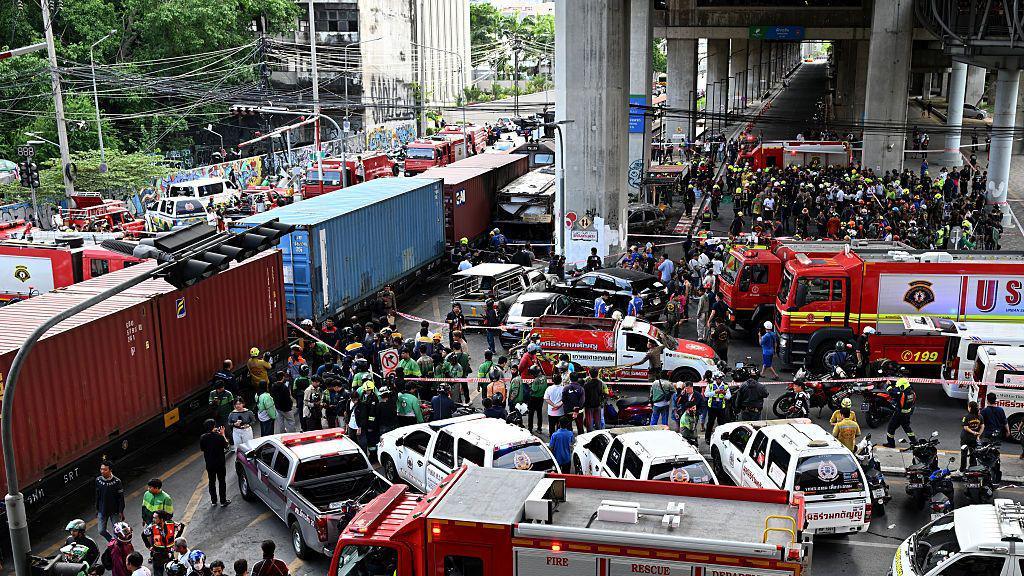
On a humid Bangkok evening, a freight locomotive, its driver allegedly under the influence of stimulants, barreled into a crowded bus, killing eight passengers and injuring dozens. The collision, captured by surveillance footage, instantly became a grim illustration of how fragile public safety can be when regulatory oversight falters.\n\nThe driver’s positive drug test raises urgent questions about Thailand’s occupational health policies for railway personnel. While periodic medical examinations are required, self‑medication and tight schedules often bypass these safeguards. Stimulant use, commonly linked to long‑haul shifts, can impair reaction time and judgment, turning a routine run into a catastrophic event. Moreover, the lack of random testing and the absence of a whistle‑blower mechanism hinder early detection.\n\nContextually, Thailand has pursued ambitious rail expansion over the past decade, aiming to reduce road congestion and foster regional integration. Yet, historical data reveal a pattern of accidents attributable to human error, suggesting that infrastructural growth outpaces safety culture. Compared with neighboring nations that have instituted mandatory drug screening for all transport workers, Thailand’s framework remains fragmented, relying heavily on employer discretion.\n\nLooking forward, the incident may catalyze legislative reforms, including compulsory toxicology screens, stricter fatigue management protocols, and investment in autonomous driving technologies. Whether these measures will be implemented swiftly depends on political will and the balance between economic interests and public welfare. The tragedy underscores a broader truth: technological progress without rigorous safety governance can exacerbate, rather than mitigate, societal risks. Authorities must also address cultural attitudes that stigmatize reporting of substance use, fostering a transparent environment for safety compliance.