Back to home
INTERNATIONAL4 July 2026
When Laughter Meets the State: The Crackdown on Deniz Göktaş
Deniz Göktaş, a celebrated Turkish comedian, was arrested after a stand‑up routine that mocked President Erdoğan and referenced Islam. Authorities accuse him of inciting hatred, raising concerns about the limits of satire in Turkey.
La
La Rédaction
The Vertex
5 min read
Source: www.bbc.co.uk
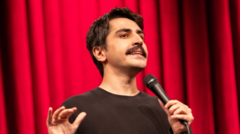
Deniz Göktaş, one of Turkey’s most beloved stand‑up comedians, found himself detained this week after a routine set that mocked President Recep Tayyip Erdoğan and touched on religious themes. The Istanbul police cited his alleged “incitement of hatred and hostility” as the basis for his arrest, a charge that has ignited a fierce debate over the limits of satire in a tightening political climate.
The accusation rests on a legal framework that criminalises speech deemed to threaten public order or insult religious sensibilities, a provision frequently wielded against dissenting voices in Turkey. For Göktaş, whose humor has long targeted Erdoğan’s authoritarian tendencies, the indictment signals a broader effort to silence artistic critique, turning a profession once celebrated for its social commentary into a potential liability.
Göktaş’s case fits a pattern that began after the 2016 coup attempt, when the Turkish government intensified its crackdown on media, academia, and cultural figures perceived as sympathetic to the Gülen movement or critical of Erdoğan. Comedy, historically a barometer of public sentiment, now faces a chilling effect as comedians self‑censor for fear of legal repercussions or loss of venue access.
The international community watches closely, as the outcome may set a precedent for how far states can regulate humor without undermining democratic discourse. If Göktaş receives a harsh sentence, it could deter future satirists, reinforcing a climate where dissent is punished rather than debated, ultimately eroding the vibrant cultural fabric that has long distinguished Turkish society. Such a development would also send a warning signal to other creative sectors, from journalism to literature, that the state’s reach into artistic expression is expanding.