Back to home
INTERNATIONAL4 July 2026
When Laughter Meets the State: The Crackdown on Deniz Göktaş in Turkey
Turkish authorities have detained popular comedian Deniz Göktaş for allegedly inciting hatred through jokes about President Erdoğan and Islam, highlighting a widening crackdown on dissent in the country.
La
La Rédaction
The Vertex
5 min read
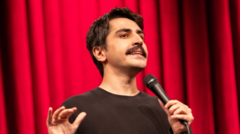
Source: www.bbc.co.uk
In the summer of 2026, Turkey’s cultural landscape was jolted by the detention of Deniz Göktaş, one of the country’s most beloved stand‑up comedians, after a routine performance that included jokes about President Recep Tayyip Erdoğan and Islam.
The accusation of “inciting hatred and hostility” on stage reflects a broader pattern in which the Turkish authorities target artistic expression that challenges political authority or touches sensitive religious topics. Göktaş’s case illustrates how the state leverages anti‑terrorism and public order statutes to silence dissent, extending beyond traditional political opposition into the realm of popular culture.
The repercussions are both symbolic and practical. For the comedy sector, the arrest sends a clear signal that punchlines deemed offensive to the president or to Islamic sensibilities may invite criminal investigation, fostering a climate of self‑censorship among performers. Economically, the incident threatens the viability of live comedy venues, a niche that has grown rapidly in urban centers, and may deter foreign investment in the cultural industry.
Contextually, the crackdown fits within the post‑2016 purges that followed the failed coup attempt, during which the government has systematically narrowed the space for independent media, academia, and civil society. By targeting a comedian, the state reinforces a narrative that any ridicule of Erdoğan or Islam constitutes a security threat, echoing earlier cases where journalists and academics faced similar charges.
Looking ahead, the durability of Turkey’s comedy scene will depend on the resilience of artists and the willingness of the public to demand artistic freedom. If the judiciary upholds the charges, the episode may entrench a chilling effect; conversely, sustained international attention and domestic advocacy could reassert the limits of state control over humor.