Back to home
CULTURE12 June 2026
David Hockney, the Visionary Who Redefined British Art, Dies at 88
David Hockney, the visionary British painter behind iconic pool and iPad landscapes, has died at 88. Tributes celebrate his lasting impact on artistic practice, market value, and the democratization of digital creation.
La
La Rédaction
The Vertex
5 min read
Source: www.bbc.com
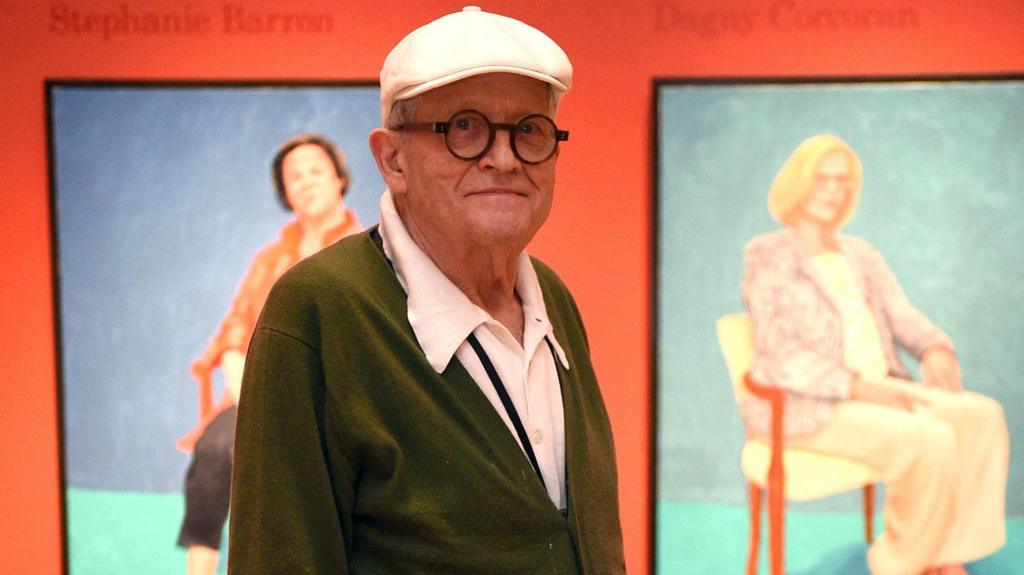
David Hockney, the preeminent British painter whose career spanned six decades, died on 29 January at the age of 88, prompting tributes that describe him as a “giant” and “true icon” of modern art.
Hockney first captured London’s swinging 1960s culture, yet his later large‑scale landscapes, most famously the Yorkshire pools and the Californian vistas rendered on an iPad, demonstrate a mastery of colour, perspective and spatial depth that surpasses conventional painting. By embracing digital tools, he argued that seeing, not the medium, is the essence of art, a claim that reshaped how artists engage with technology and broadened the market, where his works now command record auction prices and inspire a new generation of painters. His work has been featured in major retrospectives at the Tate, the Centre Pompidou and the National Gallery of Victoria, reinforcing his status as a global cultural figure and influencing both collectors and emerging artists worldwide.
Emerging from the post‑war British art scene, Hockney’s repeated focus on a single subject—whether a pool, a portrait, or a landscape—places him in the lineage of Monet’s series and Warhol’s repetitions, bridging figurative tradition with contemporary concerns. His exhibitions have attracted record visitor numbers, and his critical reception has shifted from early skepticism to canonical status, illustrating how his oeuvre redefined the parameters of contemporary British art. His exhibitions have also sparked debates on the place of contemporary art in museums, underscoring his lasting influence on cultural policy.
Looking forward, Hockney’s legacy endures through the democratization of digital creation he championed, sustained scholarly interest, and his ongoing relevance as the art world navigates technological change, offering a model for creators who seek rigor amid rapid innovation.