Back to home
POLITICS29 April 2026
Legal Crossfire: When a Former FBI Director Turns a Seashell into a Threat
Former FBI director James Comey faces criminal charges over an Instagram post that allegedly incites violence against Donald Trump, raising questions about the limits of free speech and political threat.
La
La Rédaction
The Vertex
5 min read
Source: www.bbc.com
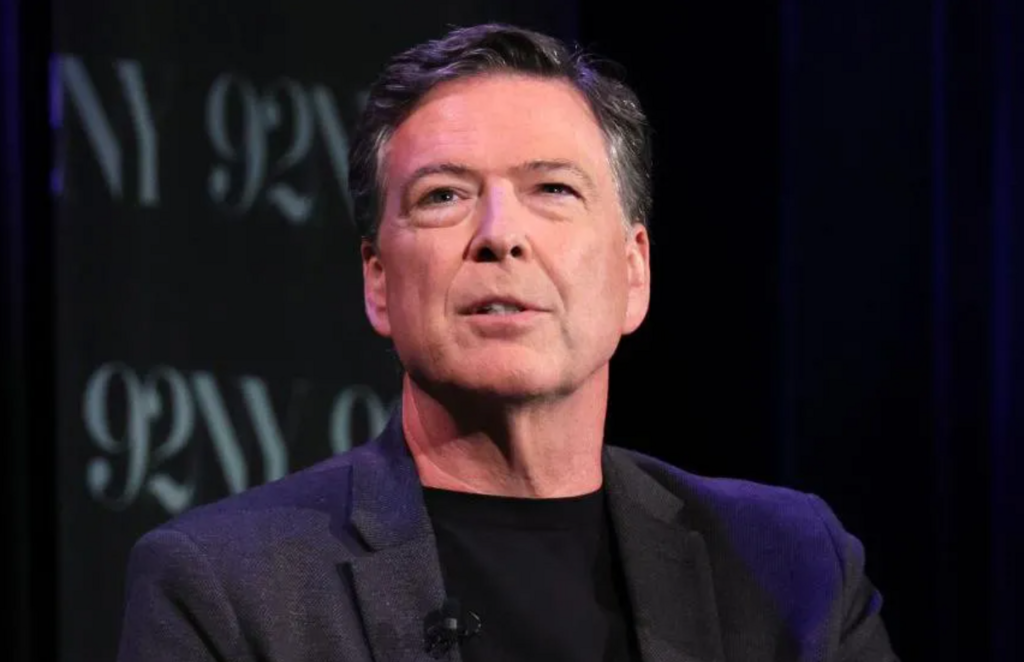
Former FBI director James Comey now faces criminal charges after prosecutors allege that an Instagram post featuring a seashell implicitly urged violence against former President Donald Trump. The indictment, filed in a Washington district court, marks a rare instance in which a high‑profile former official is accused of crossing the line from vigorous political commentary into a prosecutable threat. The charge reflects a novel application of existing statutes that criminalize threats against public officials, regardless of the medium used.
Legal scholars note that the case hinges on the distinction between protected speech and a 'true threat'—a standard that requires proof of intent to incite imminent lawless action. While the First Amendment shields robust criticism of public figures, the Justice Department argues that the post's context, timing, and alleged coded language constitute a credible threat rather than mere hyperbole.
The episode fits a broader pattern since 2020, when political polarization has turned social media into a battlefield for intimidation. Former officials, activists, and ordinary citizens have used platforms to issue veiled warnings, testing the limits of both free expression and the legal system’s capacity to police incitement in a hyper‑connected age. Such digital provocations echo historical episodes where rhetoric quickly escalated into legal confrontations, reminding us that the line between speech and threat is fragile.
If convicted, Comey could face a felony sentence that underscores the gravity of threatening a former president, while an acquittal might embolden critics who view such prosecutions as political weaponization. Regardless of the verdict, the case will likely intensify debate over platform moderation, the definition of political threat, and the resilience of democratic discourse in an era where a single image can spark a national legal firestorm.