Back to home
INTERNATIONAL24 March 2026
Colombia's Military Tragedy: When Accidents Expose Systemic Risks
A Colombian military plane crash killing 66 raises critical questions about aviation safety in Latin America's armed forces, highlighting the tension between operational demands and aging military fleets operating under budgetary constraints.
La
La Rédaction
The Vertex
5 min read
Source: www.bbc.com
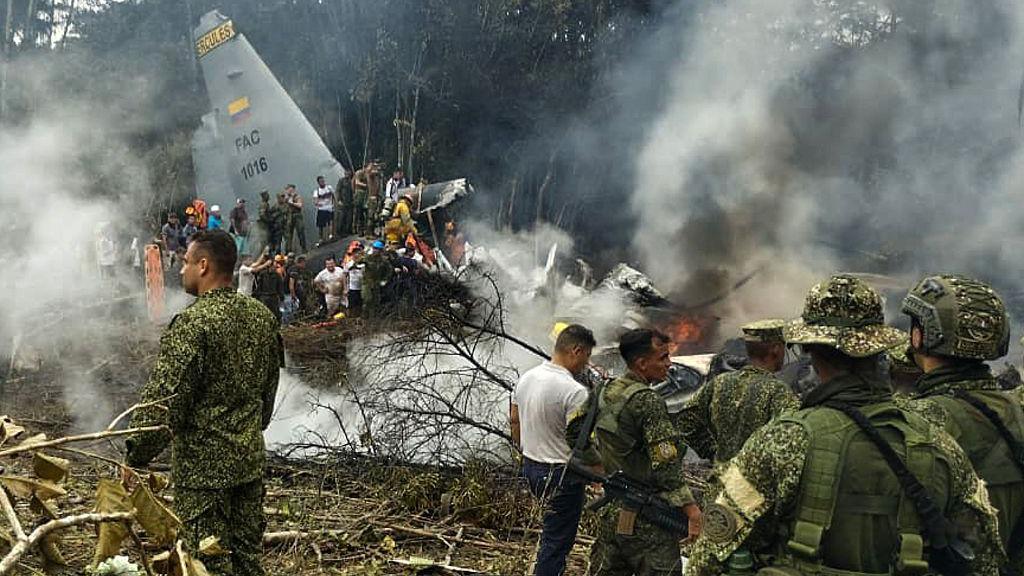
The crash of a Colombian military transport plane that killed at least 66 people represents more than a tragic accident—it reveals the complex interplay between operational necessity and safety protocols in Latin America's armed forces. As Colombia's defense minister acknowledged the tragedy while investigations remain ongoing, the incident raises uncomfortable questions about military aviation safety in a region where aging fleets often operate under budgetary constraints.
The timing is particularly sensitive. Colombia, while transitioning from decades of internal conflict, still maintains significant military operations against drug trafficking organizations and dissident groups. Military transport aircraft serve as the logistical backbone for these operations, often flying in challenging terrain and weather conditions. The loss of such a significant number of personnel in a single incident not only devastates military families but also creates operational gaps that could compromise ongoing missions.
Historically, Latin American military aviation has struggled with modernization challenges. Many countries inherited Soviet-era or American surplus aircraft that, while robust, require intensive maintenance. Colombia's military, despite being one of the region's best-funded, has faced similar pressures. The question investigators must now address is whether this was a case of mechanical failure, human error, or a combination of factors that have accumulated over years of operational stress.
Looking forward, this tragedy could catalyze reforms in military aviation safety standards across the region. Countries may accelerate fleet modernization programs or implement more rigorous maintenance protocols. However, these improvements come with significant costs in an era of fiscal constraints. The true measure of this tragedy's impact will be whether it leads to meaningful changes that prevent future accidents while maintaining operational capabilities essential for national security.