Back to home
INTERNATIONAL10 July 2026
China's Reusable Rocket Milestone: A New Era in Space Access
China’s first successful landing of a reusable rocket marks a major step in its space program, echoing achievements by SpaceX and Blue Origin and signaling a shift toward cost‑effective, market‑driven launch capabilities.
La
La Rédaction
The Vertex
5 min read
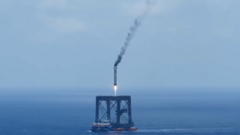
Source: www.bbc.co.uk
On July 10, 2026, China’s state media announced the first landing of a reusable rocket, a milestone that signals a decisive turn in its space ambitions.
The launch, conducted by the China Aerospace Science and Technology Corporation, placed a small payload into low‑Earth orbit before the first stage returned vertically to a pad, echoing achievements by SpaceX and Blue Origin. The feat relies on grid‑finned control surfaces, advanced throttling, and autonomous landing algorithms, enabling cost cuts per kilogram and higher launch cadence. Reusability promises to lower launch prices by up to 30%, making China competitive with Western providers and attractive to smaller satellite operators worldwide.
Politically, it shows Beijing’s shift from a state‑driven research program to a market‑oriented enterprise, aligning with policies that welcome private and foreign investment while boosting national prestige. Public interest surged on social media, and the event is likely to boost STEM education, feeding a new generation of engineers and scientists. China now joins the United States, Russia and a few commercial operators in the reusable‑rocket club, reflecting a global move toward sustainable space operations that began with the 2015 Falcon 9 landing.
The spectacle also fuels national pride, reinforcing the narrative of China’s rise as a technological superpower. The development paves the way for reusable stages in upcoming lunar and Mars missions, where payload capacity and turnaround time are critical.
Its reliability will shape China’s role in the international launch market; continued testing, regulatory alignment and global partnerships are needed to turn this breakthrough into lasting advantage. If successful, the reusable system could lower the cost of crewed missions and accelerate China’s participation in international space collaborations.