Back to home
INTERNATIONAL10 April 2026
The Ngogo Chimpanzees: When Primate Societies Mirror Human Conflict
Researchers have documented a devastating internal conflict among Uganda's Ngogo chimpanzees, offering unprecedented insights into the nature of primate warfare and its parallels with human civil conflicts.
La
La Rédaction
The Vertex
5 min read
Source: www.bbc.com
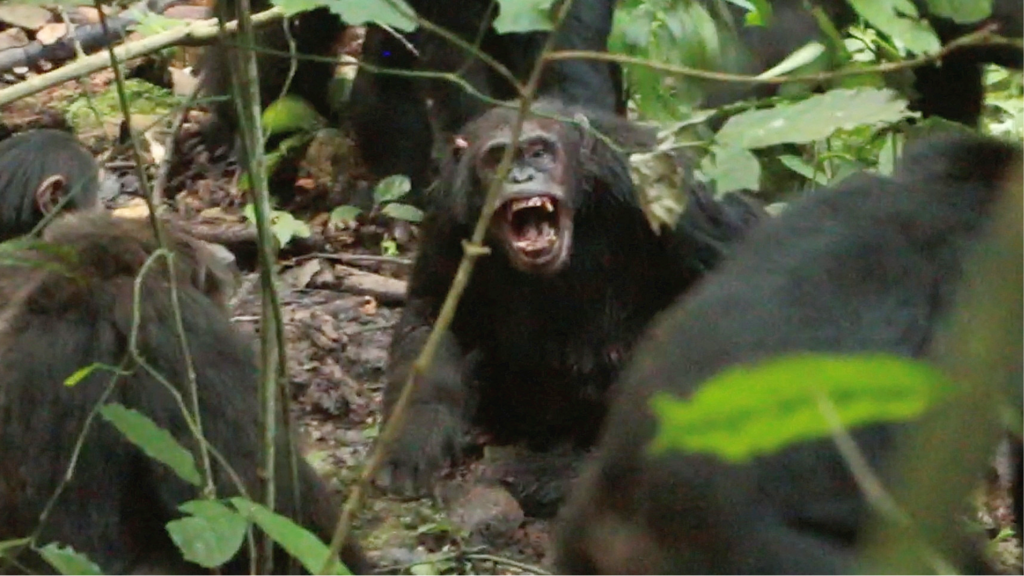
In the dense forests of Uganda's Kibale National Park, researchers have witnessed an extraordinary and disturbing phenomenon: a chimpanzee community tearing itself apart in what can only be described as a 'civil war.' The Ngogo chimpanzee group, once celebrated as one of the largest and most cohesive primate societies ever studied, has been embroiled in internal conflict for the past eight years.
The schism began gradually, with subtle shifts in alliance patterns and territorial boundaries. What started as minor disagreements between subgroups has escalated into violent confrontations, with researchers documenting lethal attacks between former companions. This intra-species warfare challenges our understanding of primate social structures and raises profound questions about the evolutionary roots of conflict.
Scientists observing the Ngogo community have noted striking parallels to human civil conflicts. The breakdown of social cohesion, the formation of rival factions, and the escalation of violence all mirror patterns seen in human societies. This observation is particularly significant given that chimpanzees share approximately 98.7% of their DNA with humans, making them our closest living relatives.
The implications of this primate conflict extend beyond academic interest. Understanding the triggers and dynamics of chimpanzee warfare could provide valuable insights into conflict resolution in human societies. Researchers are particularly interested in whether resource scarcity, power struggles, or social dynamics are driving the Ngogo conflict.
As the conflict continues, conservationists worry about the long-term survival of the Ngogo community. The energy expended in constant warfare reduces time for essential activities like foraging and mating, potentially threatening the group's viability. This natural experiment in primate conflict offers a sobering reminder of how quickly social bonds can fracture and how conflict can become self-perpetuating.
Looking forward, researchers hope that understanding the resolution (or lack thereof) of this chimpanzee conflict will provide valuable lessons for both primate conservation and human conflict management.