Back to home
POLITICS4 April 2026
Burkina Faso's Military Ruler Declares Democracy 'Unworkable' for Nation
Burkina Faso's military leader Capt Ibrahim Traoré has declared democracy 'unworkable' for his country, citing security challenges. The statement marks a significant setback for democratic progress in West Africa amid rising military takeovers.
La
La Rédaction
The Vertex
5 min read
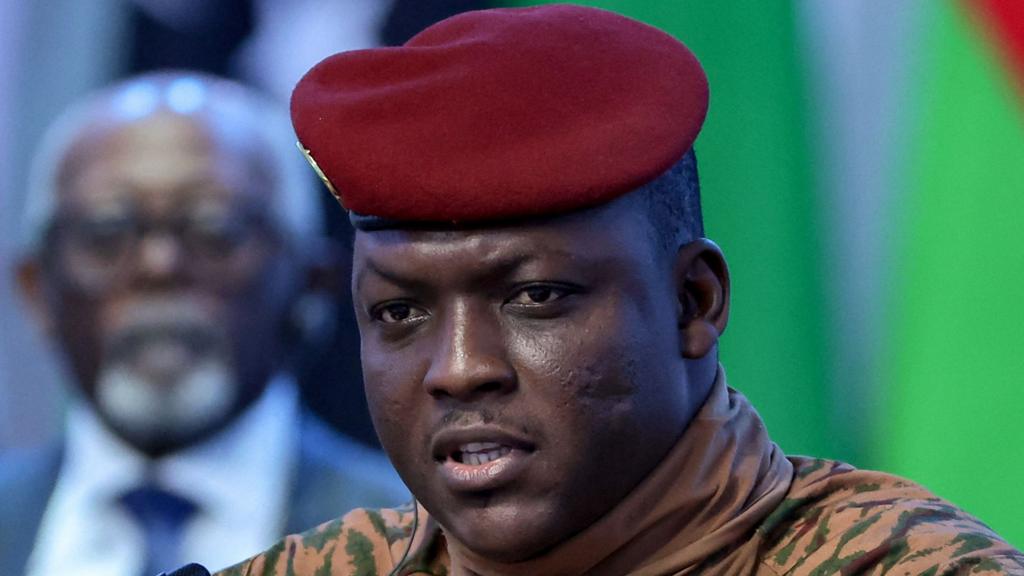
Source: www.bbc.com
In a stark repudiation of democratic governance, Burkina Faso's military leader, Captain Ibrahim Traoré, has declared that his country must 'forget' about democracy. Since seizing power in a September 2022 coup, Traoré has justified his authoritarian rule by citing the need for stability in the face of escalating jihadist violence that has claimed thousands of lives and displaced millions.
The statement marks a significant setback for democratic progress in West Africa, where military takeovers have become increasingly common. Traoré's regime follows two other coups in the region in 2020 and 2021, suggesting a troubling regional pattern. The captain argues that democratic institutions are too slow to address urgent security challenges, though critics contend that military rule has not demonstrably improved the security situation.
Burkina Faso's democratic regression comes at a critical juncture. The country had made notable progress since Blaise Compaoré's ouster in 2014, holding successful elections and establishing civilian oversight. Traoré's rejection of this trajectory raises questions about the viability of democracy in fragile states facing multiple crises. His stance also reflects a broader debate about governance models suitable for developing nations contending with terrorism, poverty, and weak institutions.
The international community has largely condemned Traoré's anti-democratic stance, with the African Union suspending Burkina Faso's membership. However, the regime maintains popular support among segments of the population desperate for security solutions. Whether Traoré's militarized governance model represents a temporary aberration or a new paradigm for crisis-ridden African states remains to be seen, but his words signal a profound challenge to democratic norms in the Sahel region.