Back to home
TECHNOLOGY29 May 2026
A Celestial Setback: The Blue Origin Explosion and Its Ripple Effects on Lunar Ambitions
An unexpected explosion of Blue Origin's New Shepard rocket during a test flight has raised doubts about the reliability of private launch providers and the timing of NASA's Artemis lunar return. The incident underscores the vulnerability of a partnership that is central to the Moon return strategy.
La
La Rédaction
The Vertex
5 min read
Source: www.bbc.com
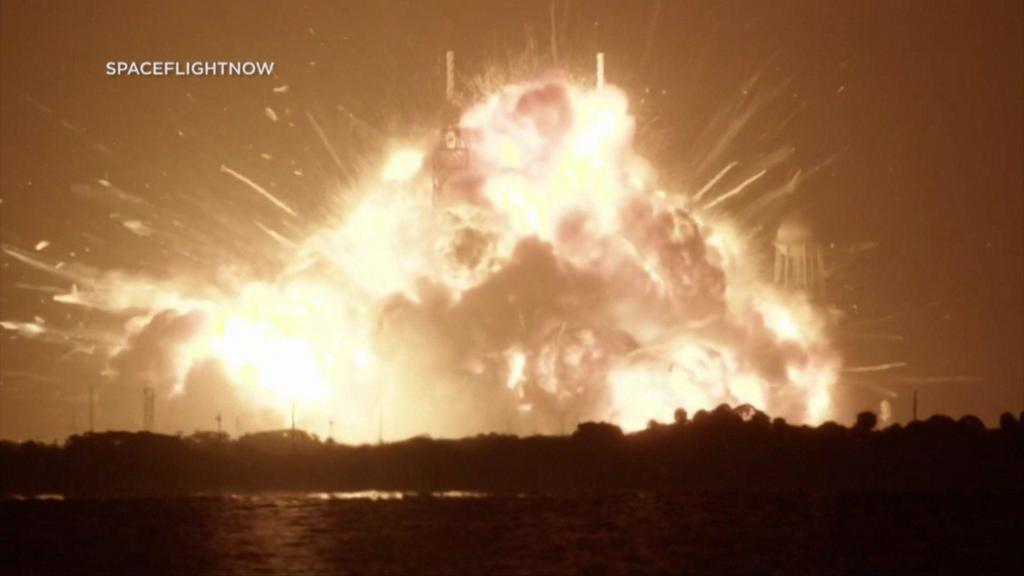
An unexpected explosion of Blue Origin's New Shepard rocket during a test flight has sent ripples through both the commercial space sector and NASA's Artemis lunar agenda. The incident, captured on multiple camera feeds, halted a scheduled sub‑orbital flight and raised immediate questions about the reliability of private launch providers that are increasingly integral to the agency's Moon return plans.
The setback highlights three dimensions. Politically, it renews scrutiny of the U.S. reliance on a few firms for critical launch services, a dependence that could affect funding and regulation. Economically, it is a tangible blow to Blue Origin, whose valuation and NASA contracts depend on flawless performance; insurance costs and investor confidence may feel the tremor. Technically, the explosion reveals ongoing propulsion safety and quality‑control challenges, prompting a review of testing protocols for lunar‑bound vehicles.
Contextualising the event within the broader Artemis programme reveals its significance. Since the 2020s, NASA has shifted from sole reliance on the Space Shuttle to a model that partners with commercial entities for cargo and crew transport. The agency's goal of landing the first woman and the next man on the Moon by 2026 depends on a robust, recurring launch cadence that the current setback threatens to compress. Historical parallels, such as the 1986 Challenger disaster, remind policymakers that technical mishaps can precipitate prolonged program delays.
Looking ahead, the implications extend beyond a single launch failure. NASA may need to diversify its launch portfolio, accelerate certification timelines, and reinforce safety cultures across the supply chain. For Blue Origin, the episode could catalyse a more rigorous testing regime, potentially accelerating its own lunar lander development. Ultimately, the resilience of the United States' lunar ambitions will be measured by how swiftly it can absorb this setback and re‑establish a reliable launch ecosystem.