Back to home
INTERNATIONAL14 July 2026
When the Wild Turns Violent: A Bison’s Unexpected Assault in Yellowstone
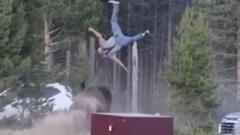
A grandfather and his grandson were at a safe distance from a bison in Yellowstone when it suddenly charged, striking the elder and hurling him several metres into the air.
La
La Rédaction
The Vertex
5 min read
Source: www.bbc.co.uk
A grandfather and his young grandson were maintaining a respectful distance from a bison in Yellowstone National Park when the animal suddenly charged, striking the elder and hurling him roughly five metres into the air.
The incident underscores the unpredictable nature of large herbivores and the limitations of distance‑based safety assumptions. Bison, despite their bulk, can accelerate to 56 km/h and execute rapid, decisive attacks when they perceive threat. Yellowstone officials have repeatedly emphasized that a minimum of 100 feet (about 30 metres) should separate visitors from bison, yet the animal’s sudden burst of speed can close that gap in an instant. The fact that the pair were initially at a safe distance suggests that conventional park guidelines may not fully account for the species’ capacity for sudden aggression, highlighting a need for more nuanced risk communication.
Such encounters, while rare, have risen alongside increasing visitor numbers and the encroachment of wildlife into human‑dominated landscapes. Climate‑driven changes in vegetation and water availability can alter bison behavior, making them more prone to defensive actions. In the past decade, Yellowstone has documented a modest uptick in close‑range bison sightings, prompting the park to expand ranger patrols and install additional warning signage. Moreover, the growing popularity of social‑media wildlife photography has introduced new pressures, as tourists seek ever‑closer perspectives, inadvertently reducing the safety margin between people and powerful animals.
Looking ahead, a reassessment of visitor education programs is essential, along with the deployment of real‑time monitoring technologies and possibly stricter buffer zones around known grazing areas. As tourism rebounds post‑pandemic, proactive management will be vital to prevent further unexpected confrontations between humans and apex herbivores. Park administrators may also consider integrating predictive analytics that factor in seasonal bison movements, thereby enhancing early warning systems and reducing the likelihood of repeat incidents.