Back to home
INTERNATIONAL15 April 2026
Economic Sacrifice for Strategic Security: Bessent Defends Iran Sanctions
Treasury Secretary Scott Bessent defends economic costs of Iran sanctions, arguing temporary financial pain is necessary for long-term security against potential Iranian attacks on Western capitals.
La
La Rédaction
The Vertex
5 min read
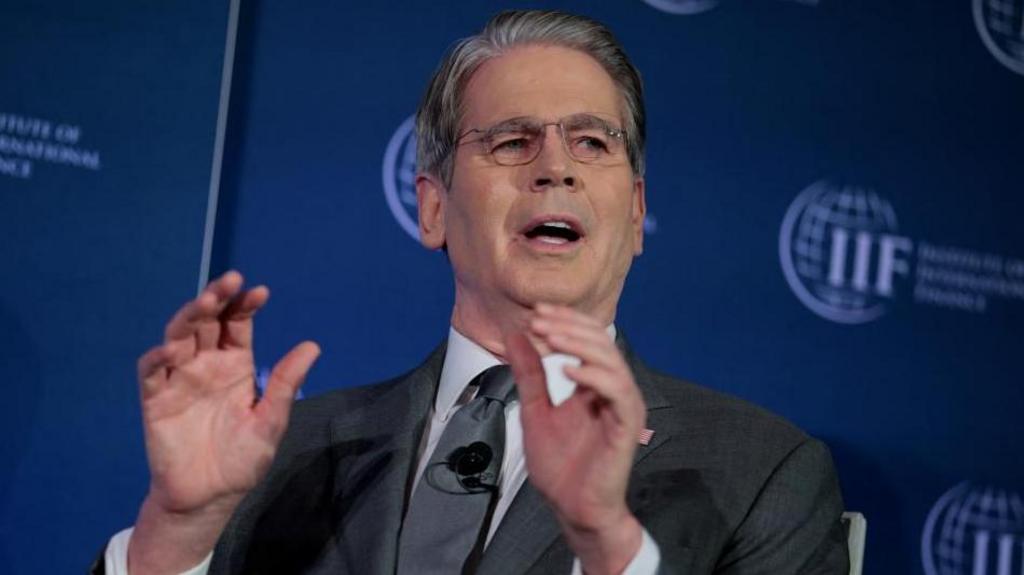
Source: www.bbc.com
In a stark assessment of US foreign policy priorities, Treasury Secretary Scott Bessent has defended the economic costs of sanctions against Iran, arguing that temporary financial discomfort is a necessary price for long-term security. Speaking to the BBC, Bessent acknowledged that American businesses and consumers would face increased costs but framed these as a strategic investment in preventing potential Iranian attacks on Western capitals.
The administration's calculus reflects a broader shift in how economic warfare is perceived in Washington. Where previous administrations often prioritized minimizing domestic economic fallout, the current approach explicitly accepts collateral damage to US markets and consumers. This represents a significant departure from traditional cost-benefit analyses in sanctions policy.
Economic analysts note that the sanctions have already begun affecting global oil markets, with prices showing increased volatility. European allies, while supporting the broader security objectives, have expressed concerns about the unilateral nature of the approach and its potential to fragment the Western alliance.
The policy's long-term implications extend beyond immediate economic impacts. By accepting domestic economic pain as a feature rather than a bug of sanctions policy, the administration is essentially betting that voters will prioritize security concerns over short-term financial considerations. This represents a high-stakes political calculation as much as a foreign policy strategy.
As the sanctions regime continues to evolve, the true test will be whether the promised security benefits materialize or whether the economic costs prove politically unsustainable. The administration's willingness to endure these costs suggests a fundamental reassessment of how America weighs economic interests against security imperatives in an increasingly volatile geopolitical landscape.