Back to home
INTERNATIONAL27 March 2026
North Korea and Belarus Seal Strategic Alliance Amid Ukraine War
Belarus and North Korea signed a strategic partnership treaty, deepening ties among Russia's allies amid the Ukraine war and creating new security concerns for Western nations.
La
La Rédaction
The Vertex
5 min read
Source: www.bbc.com
In a symbolic display of solidarity, Belarusian President Alexander Lukashenko visited Pyongyang this week to sign a comprehensive strategic partnership treaty with North Korean leader Kim Jong Un. The timing—amid Russia's ongoing war in Ukraine—signals a deepening alignment among Moscow's closest allies.
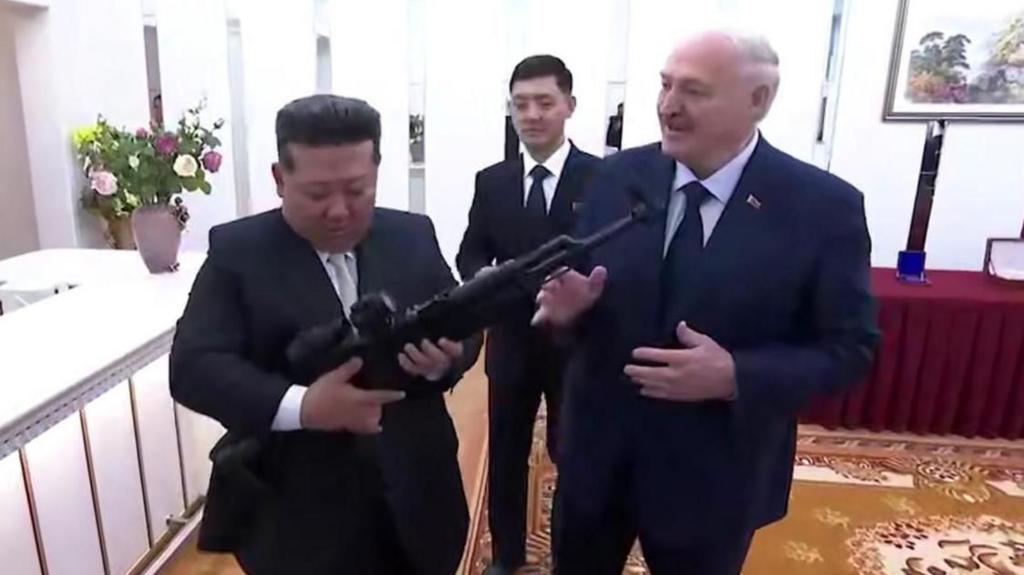
The treaty, which includes provisions for mutual military assistance and economic cooperation, marks a significant escalation in North Korea's diplomatic outreach. For Belarus, it represents a diversification of international partnerships beyond its traditional reliance on Moscow. The gift of a hunting rifle from Lukashenko to Kim, while seemingly trivial, carries potent symbolism in authoritarian circles.
This alliance emerges from shared isolation: both regimes face Western sanctions and diplomatic pressure. North Korea's provision of artillery shells and missiles to Russia has already strained international relations, while Belarus serves as a crucial staging ground for Russian military operations. The partnership creates a three-way axis of sanctioned states, potentially complicating Western strategic calculations.
Economic implications are substantial. The treaty opens pathways for technology transfer, with North Korea potentially sharing its missile expertise in exchange for Belarusian industrial equipment. Both nations also seek to establish alternative trade networks outside Western-dominated financial systems.
The alliance reflects a broader trend of authoritarian states banding together against perceived Western encroachment. As the Ukraine conflict persists, such partnerships may become increasingly common, creating new geopolitical fault lines. For regional neighbors, particularly South Korea and NATO members, this development raises serious security concerns about coordinated military capabilities among sanctioned states.