Back to home
INTERNATIONAL1 July 2026
Silencing the Aftermath: The Unrevealed Beijing Plane‑Tower Collision
On 30 June 2026 a plane struck a Beijing skyscraper, leaving visible damage, yet Chinese authorities offered no explanation and erased other signs of the crash. The incident highlights the regime’s tight control over information and raises questions about transparency in a major capital city.
La
La Rédaction
The Vertex
5 min read
Source: www.bbc.co.uk
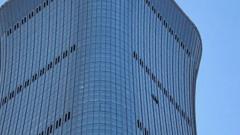
On 30 June 2026, a commercial aircraft collided with a high‑rise tower in Beijing’s Chaoyang district, leaving a jagged scar on the building’s façade. Photographs released by local authorities showed a series of irregular openings along the tower’s side, evidence of the impact, while the surrounding area appeared unusually pristine, with no debris, fire trucks, or emergency personnel visible in the official images. Chinese officials have offered no explanation for the incident, nor have they disclosed the aircraft’s identity, the cause of the crash, or the fate of the occupants. This deliberate omission raises questions about transparency, governance, and the broader political calculus at play in a country where public narratives are tightly controlled.
The absence of detailed reporting suggests a strategic decision to limit the narrative’s scope. By erasing overt signs of the accident, the state may aim to prevent public alarm, protect the reputation of the capital’s infrastructure, and avoid exposing potential vulnerabilities in air traffic management or security protocols. The move also reflects a wider pattern in which Chinese authorities pre‑emptively suppress information that could be interpreted as a systemic failure, especially in a context where social stability is paramount.
Historically, China has responded to major mishaps such as the 2015 Tianjin explosions or the 2020 Hong Kong airport disruptions by censoring footage, restricting journalist access, and issuing vague official statements. The Beijing tower incident fits this template, reinforcing a trajectory in which the Party prioritizes narrative cohesion over factual disclosure. Internationally, the incident may prompt scrutiny of China’s aviation safety standards and its commitment to the Chicago Convention, while domestically it could fuel speculation among citizens and exacerbate distrust toward official channels.
Looking ahead, the lack of openness may compel independent observers and foreign governments to infer motives from limited data, potentially shaping diplomatic narratives. If the incident is tied to broader safety concerns, Beijing may be forced to tighten regulatory oversight, yet it is likely to do so behind closed doors, preserving its preferred image of infallibility while addressing the underlying issue discreetly.