Back to home
INTERNATIONAL12 July 2026
A Ravine of Fire: The Human Cost of Spain’s Wildfire Crisis
A British couple was rescued after being trapped for hours in a ravine near Almería, emerging with severe burns, highlighting the escalating danger of Spain’s summer wildfires.
La
La Rédaction
The Vertex
5 min read
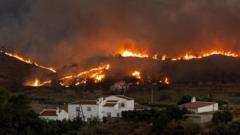
Source: www.bbc.co.uk
An unnamed British couple, rescued after being trapped for hours in a deep ravine near Almería, emerged semi‑conscious with roughly forty percent of their bodies suffering third‑degree burns. Local authorities confirmed that the pair were found by firefighters amid flames that had reduced the surrounding terrain to a charred wasteland, underscoring the ferocity of the wildfires that have engulfed southern Spain this summer.
The incident highlights the strain on Spain’s emergency services, which have been stretched thin by a series of unprecedented fires across Almería and neighboring provinces. Coordination between regional fire brigades, the national Civil Protection Agency, and international volunteer groups has been praised, yet the scale of displacement and property loss raises questions about the adequacy of current funding models and the resilience of rural infrastructure. Estimates suggest that the ongoing fires have already incurred tens of millions of euros in damages, affecting tourism, a key pillar of the regional economy.
Beyond the immediate physical trauma, the couple’s ordeal reflects a broader social vulnerability. Residents of the arid Almería plateau, many of whom rely on agriculture or tourism, face heightened exposure to climate‑driven extremes. The increasing frequency of severe fire seasons, linked to rising temperatures and prolonged droughts, signals a shifting risk landscape that threatens both livelihoods and the cultural fabric of the region. The severe burns are likely to require extensive rehabilitation, illustrating the long‑term medical burden on public health services.
Looking ahead, the rescue underscores the need for proactive risk management. Enhanced forest‑management practices, expanded early‑warning systems, and sustained investment in community preparedness could mitigate future casualties. As climate patterns continue to evolve, the episode serves as a stark reminder that the consequences of wildfire extend far beyond the flames themselves, demanding a coordinated, long‑term response at the national and European levels.