Back to home
INTERNATIONAL12 July 2026
Scorched by Flames: The Unseen Human Cost of Spain’s Wildfire Crisis
A British couple was rescued from a ravine in Almería after suffering 40% burns in Spain’s recent wildfires. The incident highlights the growing human toll of climate‑driven megafires and the strain on emergency services.
La
La Rédaction
The Vertex
5 min read
Source: www.bbc.co.uk
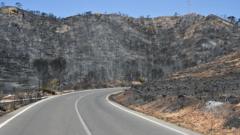
A British couple, whose identities remain undisclosed, was pulled from a deep ravine in Almería after enduring a harrowing 40‑percent burn injury sustained during Spain’s recent wildfire onslaught. Local authorities reported that the pair were found semi‑conscious, their bodies bearing extensive tissue damage, and were immediately airlifted to a specialized burns unit.
The rescue operation highlighted both the ferocity of the blaze and the logistical strain on emergency services. Firefighters, aided by helicopters and terrain‑adapted vehicles, spent hours navigating rugged canyons before locating the victims. Medical teams now face a lengthy rehabilitation process, as extensive burns often lead to infection risk, scar tissue formation, and psychological trauma.
Spain has experienced a surge in wildfire activity over the past decade, a trend scientists link to rising temperatures and prolonged droughts exacerbated by climate change. The Almería region, traditionally arid, has seen an unprecedented expansion of forest fires, challenging traditional land‑management practices and exposing vulnerable communities to greater risk.
While the couple’s anonymity prevents a fuller personal narrative, their case reflects a growing pattern: ordinary citizens caught in the crossfire of climate‑driven catastrophes, whose stories often dissolve into statistical headlines. Media coverage, though limited, has sparked debate over the adequacy of rescue resources and the moral responsibility of nations to protect residents and visitors alike.
Looking ahead, the incident underscores the need for more robust early‑warning systems and cross‑border cooperation to mitigate the human toll of increasingly frequent megafires. As global temperatures climb, the frequency and intensity of such disasters are likely to rise, demanding not only swift rescue capabilities but also long‑term strategies that address root causes, from forest stewardship to emissions reduction.