Back to home
INTERNATIONAL24 March 2026
Australia-EU Trade Pact: A Strategic Alliance in Turbulent Times
Australia and the EU have signed a comprehensive trade and security agreement, signaling a strategic realignment amid global uncertainty and rising protectionist pressures.
La
La Rédaction
The Vertex
5 min read
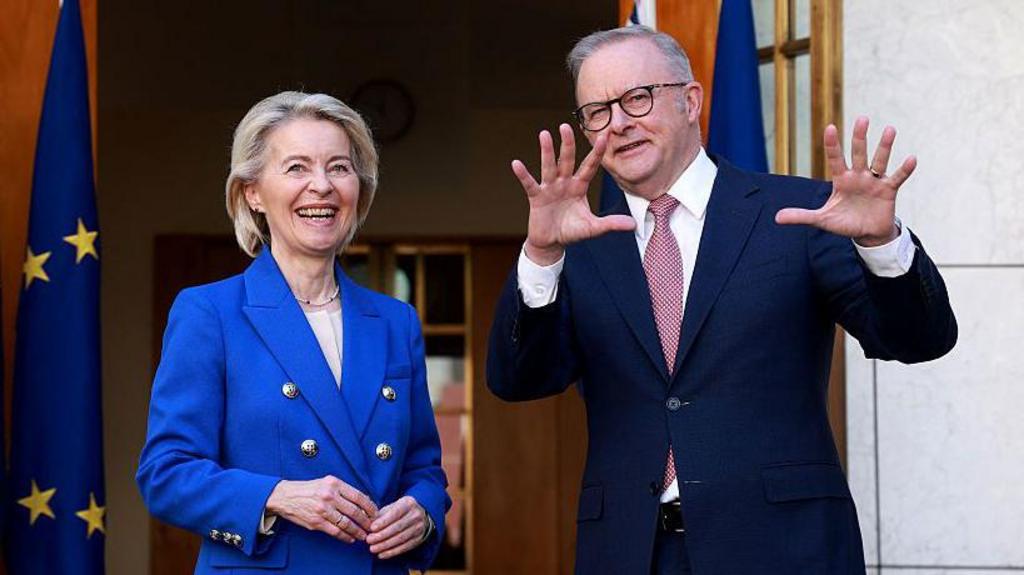
Source: www.bbc.com
After years of negotiations, Australia and the European Union have signed a comprehensive trade and security agreement that signals a significant realignment of global partnerships. The deal, finalized amid rising geopolitical tensions and economic uncertainty, covers everything from tariff reductions to cooperation on critical minerals and technology standards.
The timing is particularly telling. As the United States under President Trump pursues protectionist policies and questions long-standing alliances, both Australia and the EU appear to be hedging their bets. This agreement represents more than just economic benefits—it's a strategic statement about the future of liberal democracies' cooperation in an increasingly fragmented world.
For Australia, the deal provides crucial diversification of trade relationships beyond its traditional partners. The country has been particularly vulnerable to trade coercion, notably from China, and this agreement offers a buffer against such pressures. The EU gains access to Australia's critical minerals and agricultural products while strengthening its Indo-Pacific presence.
The security dimensions of the pact are equally significant. Both parties have agreed to enhanced intelligence sharing and cooperation on cybersecurity, areas of growing concern as authoritarian states expand their influence. This represents a deepening of what was previously a transactional relationship into something more akin to a strategic partnership.
Looking ahead, this agreement could serve as a template for similar deals with other like-minded democracies. It suggests a future where regional blocs might form tighter security and economic ties, potentially creating a new architecture for global trade that operates parallel to existing institutions like the WTO.