Back to home
INTERNATIONAL1 April 2026
Artemis II: Humanity's Return to Lunar Exploration After Half a Century
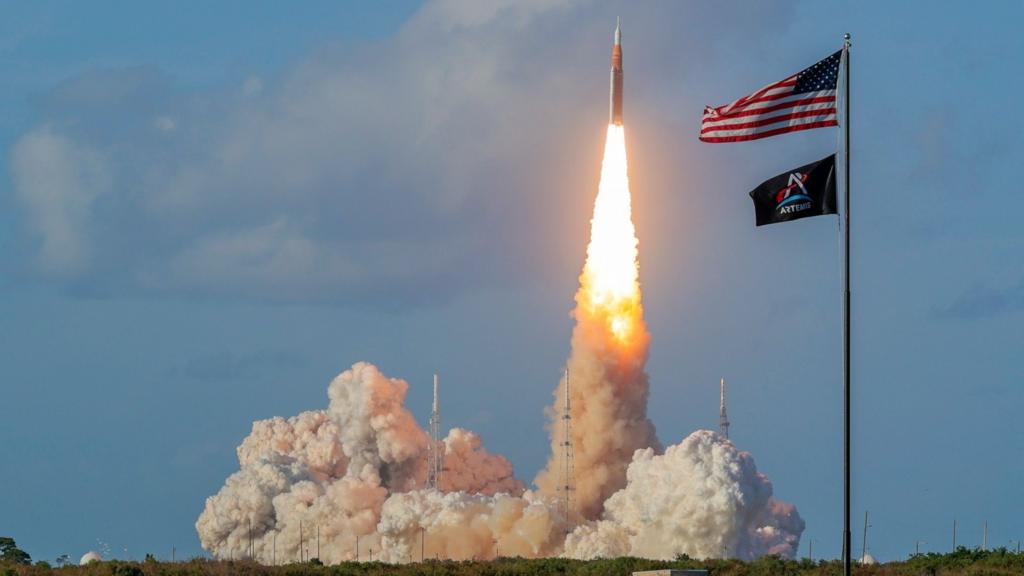
NASA's Artemis II mission successfully launched after years of delays, marking humanity's first crewed Moon mission in 50 years. The mission represents a critical step toward establishing a permanent lunar presence and potentially reaching Mars.
La
La Rédaction
The Vertex
5 min read
Source: www.bbc.com
After years of delays, technical setbacks, and budget challenges, NASA's Artemis II mission finally pierced the Florida sky, marking humanity's first crewed journey to the Moon since the Apollo era ended in 1972. The successful launch represents not just a technical achievement but a geopolitical statement in an era where space has become the new frontier of international competition.
The four astronauts aboard the Orion spacecraft—three Americans and one Canadian—are now orbiting Earth as the first phase of this historic mission. This crew composition reflects NASA's strategy of building international partnerships to share the enormous costs and risks of deep space exploration. The Artemis program, with an estimated price tag exceeding $93 billion, represents NASA's most ambitious undertaking since the Space Shuttle era.
Beyond the immediate technical triumph, Artemis II carries profound implications for the future of space exploration. The mission serves as a critical test for the technologies that will eventually establish a permanent lunar base and pave the way for human missions to Mars. The program's success could catalyze a new space race, with China and private companies like SpaceX racing to establish their own lunar presence.
The delays that plagued Artemis II—from technical issues with the heat shield to challenges with the Space Launch System rocket—highlight the immense complexity of returning to the Moon. Yet these setbacks also demonstrate NASA's commitment to safety over schedule, a lesson learned from past tragedies. As the Orion spacecraft continues its journey, the world watches not just a rocket, but the rekindling of humanity's oldest dream: to reach beyond our world and explore the cosmos.